Roman Catholic
St Sigismund parish
05-507 Słomczyn
85 Wiślana Str.
Konstancin deanery
Warsaw archdiocese, Poland




full list:
displayClick to display full list

searchClick to search full list by categories
wyświetlKliknij by wyświetlić pełną listę po polsku

szukajKliknij by przeszukać listę wg kategorii po polsku

Martyrology of the clergy — Poland
XX century (1914 – 1989)
personal data
religious status
Servant of God
surname
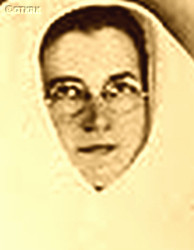
TRUDZIŃSKA
forename(s)
Wanda Janet (pl. Wanda Janina)
religious forename(s)
Longina
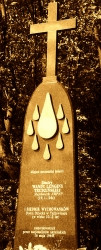
function
nun
creed
Latin (Roman Catholic) Church RCmore on
en.wikipedia.org
[access: 2014.09.21]
congregation
Congregation of the Stara Wieś Sisters Servants of the Blessed Virgin Mary of the Immaculate Conception ABMVmore on
www.sluzebniczkinmp.pl
[access: 2013.01.06]
(i.e. Stara Wieś Sisters Servants)
diocese / province
Lublin diocesemore on
pl.wikipedia.org
[access: 2013.05.19]
date and place
of death
16.05.1944

Sahryńtoday: Werbkowice gm., Hrubieszów pov., Lublin voiv., Poland
more on
en.wikipedia.org
[access: 2021.12.18]
alt. dates and places
of death
15.05.1944
details of death
From 1933, served at the Orphans Institute, run by the Congregation of the Stara Wieś Sisters Servants of the Blessed Virgin Mary of the Immaculate Conception ABMV in the village of Turkowice, Hrubieszów county, in the Polish Lublin Voivodeship, on the Hrubieszów – Rava‐Ruska railway line, c. 16 km southwest of Hrubieszów and c. 40 km east of Zamość.
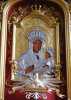
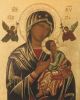
The Institute began as a branch of the Orthodox St Anthony monastery of Radacznica, founded in Turkowice in 1903 — then located in the Rus. Люблинская губерния (Eng. Lublin Governorate), in the Rus. Царство Польское (Eng. Kingdom of Poland), i.e. part of partitioned Poland in the Russian Empire. The nuns ran a pharmacy, a hospital, a beekeeping and farm school, an orphanage, and from 1910 a teachers' seminary. According to sources, „Russian nuns held the leading positions in the monastery”. In 1906, the image of Our Lady of Turkowice, considered miraculous by the Ukrainian community, was moved to the monastery's church, prob. from the parish church. The image belonged originally to the Greek Catholic Order of Basilian Fathers OSBM, who had their monastery in Turkowice, but in 1875, due to the liquidation of the Uniate Church in the Russian Empire, it passed into the hands of the Orthodox Church. On the eve of the outbreak of World War I in 1914, c. 80 nuns lived in the monastery, and up to 30,000 pilgrims participated in the ceremonies. After the outbreak of the war and the Russian defeat in the Battle of Gorlice in 05.1915, c. 3,000,000 members of the Russian administrative apparatus of the partitioning authorities, officials, doctors, teachers, soldiers, clergy and their families fled from occupied Poland. Also from Turkowice — as part of the so‐called „bezhenstvo” — Orthodox nuns left, taking with them the miraculous icon. They stopped in Moscow, at the monastery of Saints Martha and Mary.
After the end of World War I and the rebirth of an independent Polish state, only four Orthodox nuns returned to Turowice. The Polish state then took over the abandoned buildings and handed them over to the Roman Catholic Stara Wieś Sisters Servants ABMV. The nuns established an orphanage, a school where Polish and Ukrainian children studied together, and a nursing home. A War Orphans Institute was established. In 1919‐1938, the facility educated 268 pupils‐children.
The Orthodox Church tried to reclaim the monastery. In 1928, the Orthodox community even commissioned and purchased a copy of the icon of Our Lady of Turkowice — the original had been lost in Russia during the Bolshevik Revolution. In 1932, c. 30,000 pilgrims came to a ceremony honoring the Turkowice Icon, but the monastery was never restituted. In 1938, prob. during the so‐called Polonization and restitution operation organized by the Polish authorities, which was, among other things, a result of the Russians leaving Polish territory during the aforementioned „bezhenstvo” in 1915 and the rebirth of the Uniate Church, e.g. the Greek Catholic Church, once liquidated by the Russians — the Orthodox chapel in the cemetery in Turkowice was destroyed.
On 01.05.1939, the Immaculate Conception / Immaculate Heart of the Blessed Virgin Mary Roman Catholic parish was established in Turkowice.
On the eve of World War II, in 1939, Turkowice may have had an estimated population of c. 1,300 — precise data are unknown — of whom Roman Catholic Poles constituted c. 52% and Orthodox Ukrainians c. 46%. There were also a few Jews living in the village.
World War II began in 09.1939, when the Germans and Russians — pursuant to the genocidal German–Russian agreement of 23.08.1939, known as the Molotov–Ribbentrop Pact — invaded Poland. On c. 14.09.1939, the area around Hrubieszów was occupied by the Germans. On 24‐25.09.1939, pursuant to the aforementioned German–Russian pact, they withdrew and the Russians entered Hrubieszów. Immediately, the so‐called „red militia” appeared in the village, whose members were young Ukrainian inhabitants of Turkowice, prepared to collaborate with the Russians. However, a few days later, on 28.09.1939, Germany and Russia signed a second agreement, the so‐called „Treaty on the Border and Friendship between Germany and Russia”, also known as the second Molotov–Ribbentrop Pact, under which a new border was established between the allies and the occupiers. And on c. 03‐05.10.1939, the Russians left Hrubieszów and the surrounding area. Part of the Jewish community, mainly young men, fled with them — from Hrubieszów alone, c. 1,400 Jews managed to escape eastward with the Russians. And the Ukrainian „red militia” had not yet, it seems, managed to spread its wings.
Her Turkowice found itself in the Germ. Landkreis Hrubieszów (Eng. Hrubieszów County) within the Germ. Distrikt Lublin (Eng. District of Lublin), which was part of the German‐occupied and run quasi‐state called the Germ. Generalgouvernement (Eng. General Governorate), i.e. GG. The Germ. SS‐ und Polizeiführer (Eng. SS and Police Commander) in the Germ. Distrikt Lublin, and de facto deputy governor of this district, was one of the greatest criminals in the history of humanity, the Austrian Odilo Lotario Globočnik, whom one historian described as „the most vile individual in the most vile organization that has ever existed”. The Germans immediately introduced terror against the Polish population. In the Chełm region, including the Germ. Landkreis Hrubieszów, they de facto resurrected the policy of Ukrainization, which had its origins in 1918, at the end of World War I, when on 09.02.1918, the occupying Central Powers concluded a treaty in Brest‐on‐the‐Bug with the fledgling, seasonal Ukrainian state, with its capital in Kyiv, in which they granted the Chełm region to Ukraine by the law of caducus, i.e. „with disregard for the rights”, excluding the Poles. This was expressed, i.e. in taking schools from Polish hands and handing them over to Ukrainians, and expelling Catholic priests from parishes and converting churches into Orthodox.
In Turkowice, among other things, the Germans handed over part of the monastery buildings to the Orthodox Church, specifically to Orthodox nuns, who took over the building occupied by a school run by Polish nuns. Despite this, thanks to the intelligent attitude of their superior, Sr Stanislava Polechajłło, who led to the institution being placed under the control of the Central Welfare Council RGO, the only charitable organization in the GG recognized by the German occupier, were able to continue running the orphanage. Moreover, in 03.1940, RGO sent the first group of c. 150 children from Warsaw to Turkowice. At any one time, the institution housed c. 300 Polish and Ukrainian children.
At the turn of 1941/1942, after German attack on 22.06.1941 of their erstwhile ally, the Russians, the Germans began to implement the genocidal plan Germ. «Endlösung der Judenfrage» (Eng. Final Solution of the Jewish Question), which in the GG was carried out under the codename Germ. «Aktion Reinhardt» (Eng. Operation Reinhardt). In the Germ. Distrikt Lublin, it was personally led by the aforementioned Odilo Lotario Globočnik. One of the first signals of its commencement can be considered the Germ. „Law on Residency Restriction” in the GG, signed on 15.10.1941 by the Germ. Generalgouverneur (Eng. General Governor) of the GG, Hans Frank, according to which „Jews who leave their designated district without authorization are subject to the death penalty. The same punishment applies to persons who knowingly provide such Jews with a hiding place”, and „Instigators and accomplices are subject to the same punishment as the perpetrator; an attempted act will be punished as the act was committed. In less severe cases, hard prison or imprisonment may be imposed”. In parallel, the génocidaire Globočnik began building two Germ. Vernichtungslager (Eng. extermination camp) in the area under his control: VL Belzec, in the south of the Germ. Distrikt Lublin, and VL Sobibor, on the eastern border of the district. Both began „functioning” in the first half of 1942.
Jews from its Turkowice — if any resided there — were first deported to the ghetto in Hrubieszów. Based on the population growth in the Hrubieszów county, recorded between two censuses in 1921 and 1931, it can be estimated that in 1939 the town had c. 15,800 inhabitants, of whom Jews constituted c. 53%, i.e. c. 8,400 people — according to Jewish sources c. 7,500 — Roman Catholic Poles c. 41%, and Orthodox Ukrainians were c. 800. As mentioned above, c. 1,400 Jews left Hrubieszów in 09‐10.1939. Police duties in the town were taken over by a unit of the Germ. Gendarmerie (Eng. Gendarmerie) and the Germ. Sonderdienst (Eng. Special Service), called „Hans Frank's private police”, i.e. auxiliary police consisting mainly of Germ. Volksdeutsche (Eng. ethnic Germans), i.e. treacherous Polish citizens who considered themselves Germans. Smaller units of the Germ. Polnische Polizei im Generalgouvernement (Eng. Polish Police of the General Government), called the „blue police”, and the collaborationist Germ. Ukrainische Hilfspolizei (Eng. Ukrainian Auxiliary Police), in some regions also referred to as the Germ. Schutzmannschaft (Eng. Security Battalions), i.e. Schuma, were also established. At the same time, the Germans established the Germ. Judenrat (Eng. Jewish Council) and made it responsible for the Jewish community of Hrubieszów. The orders of the Germ. Judenrat were to be enforced by the Germ. Jüdischer Ordnungsdienst (Eng. Jewish Order Service). In 1939‐1940, the Germans attempted to transport c. 1,000 Jews to the Russian side — Hrubieszów was a border town — but due to Russian resistance, they forced Jews to swim across the Bug River, murdering many. C. 800 were also sent to slave labor camps, including to the first camp in Bełżec. As a result, on 10.10.1940, only 4,858 Jewish inhabitants were recorded in Hrubieszów (in 01.1941, after returning from labor camps, the number increased to c. 5,500, and in 04.1942 to c. 5,850). In 1940‐1942, an open ghetto was prob. established, perhaps called, as in other places, the Germ. Jüdischer Wohnbezirk (Eng. Jewish residential district).
In 04‐06.1942, the Germans began to bring Jews to Hrubieszów from other parts of the GG and beyond: e.g., from Kraków, Warszawa, Grudziądz, Kalisz, and Łódź. Then, the Jews from the surrounding area were also herded into the city, including prob. from her Turkowice. At the end of 05.1942, there were prob. c. 10,000 Jews in Hrubieszów. And then their deportations began. On 01‐10.06.1942, the Germ. Gendarmerie, Germ. Sonderdienst, Germ. Jüdischer Ordnungsdienst and specially brought from the Germ. SS‐Ausbildungslager (Eng. SS training camp) in Trawniki, trainees of the collaborationist formation Germ. SS‐Wachmannschaften (Eng. SS guard units) — belonging to the genocidal Germ. Die Schutzstaffel der NSDAP (Eng. NSDAP Protection Squad), i.e. «SS», a paramilitary formation subordinate to the ruling National Socialist German Workers' Party NSDAP in Germany, consisting of Russian prisoners of war who had defected to the German side, mainly Ukrainians, who took an active part in the operation to murder Jews in the GG — herded c. 5,000 Jews to the railway station and transported them to VL Sobibor, where they were all murdered. Hundreds of those trying to hide were murdered by the Germans and their collaborators at the Jewish cemetery. On 22.10.1942, another c. 3,000 Jews were deported to VL Sobibor. On 16‐18.11.1942, several hundred Jews, mainly those in hiding, were murdered at the Jewish cemetery. The Germans could proudly report that the city was Germ. „Judenrein” (Eng. „free from Jews”), although the last Jews were deported from it — to a slave labor camp — in 05.1943. 01.03.1943 the Germans noted that only 10,280 people lived in the town.
Meanwhile, on 11.08.1942, when the deportation of Jews from the Warsaw ghetto to another Germ. Vernichtungslager VL Treblinka was underway, in the Germ. Distrikt Warschau (Eng. District of Warsaw), north of the Germ. Distrikt Lublin — there are indications that Odilo Globočnik played a key role in the decision–making process of its establishment — Polish writer Sophie Kossak–Szczucka issued an appeal against the persecution of Jews titled „Protest!”, published in the underground press in a circulation of 5,000 copies. She wrote:
„The world looks upon this crime, more terrible than anything history has ever seen, and — remains silent […] This silence cannot be tolerated any longer. Whatever its motives — it is despicable. We cannot remain passive in the face of crime. Whoever remains silent in the face of murder becomes an accomplice to the murderer. Whoever does not condemn, consents.
Therefore, we, Catholics — Poles, are speaking out. Our feelings towards the Jews have not changed. We do not cease to consider them political, economic, and ideological enemies of Poland. Moreover, we realize that they hate us more than they hate the Germans […] Awareness of these feelings, however, does not release us from the obligation to condemn the crime.
[…] Whoever does not understand this, whoever would dare to link Poland's proud, free future with the vile joy of their neighbor's misfortune — is therefore neither a Catholic nor a Pole!”.
The „Protest!” was signed by the Pl. „Front Odrodzenia Polski” (Eng. „Front for the Rebirth of Poland”), i.e. FOP, a secret Catholic organization that was a continuation of Catholic Action during the Germ. occupation. On 27.09.1942 the Polish Clandestine State, the largest resistance organization in German–occupied Europe, on the initiative of Sophie Kossak–Szczucka and Wanda Krahelska–Filipowicz, a member of the Polish Socialist Party, established the Provisional Committee to Aid Jews named after Conrad Żegota. On 04.12.1942, in its place, the Council to Aid Jews at the Polish Government Delegation for Poland was established, under the codename „Conrad Żegota”. Irene Stanislava Sendlerowa became the head of the children's section.
Irene Sendler began collaborating with the Orphanage in Turkowice. „The whole operation began with a coded message in which Irene Sendler notified the nuns about the need to take more Jewish children to Turkowice. Then [one of the nuns] would leave for Warszawa, returning after a few days of travel. Despite being constantly exposed to danger and the Semitic appearance of some of the children making such a long journey even more difficult, each trip to Warszawa ended with a safe return to Turkowice. The children came here directly from the ghettos or from Polish homes, which were becoming too dangerous to provide shelter for them”. One of the nuns described such a transport: „[At the train station] you had to wait all night. The waiting room was so crowded that the children were standing. One German was honest, he told the Gypsies to get up and the children to lie down. Then the Jewish children knelt down to pray and began to say "Our Father, who art in heaven" with a Jewish accent, to which people, terrified, said again that these were Jewish children. They heard these words, because they stopped and put their curly heads to sleep. But the fear did not pass, because sometimes even in their sleep a Jewish child would scream something in his own language. Then, to save the situation, they had to be woken up. I was so worried that I only watched whether the Germans would take away the suspicious children”. Another publication adds: „Officially, they lived in the institution as Polish orphans. Their names and surnames, birth certificates were changed. Their biographies were rewritten […] The nuns were aware of the danger. Finding one Jewish child could have been a death sentence for the entire religious house”. Over 30 Jewish children owe their lives to the nuns in Turkowice. Sophie Kossak–Szczucka, Wanda Krahelska–Filipowicz, Irene Sendlerowa and four nuns from Turkowice, including the superior, Sr Stanislava Polechajłło, were awarded Israel's highest civilian distinction for non‐Jews, awarded by the Yad Vashem Holocaust Martyrs' and Heroes' Remembrance Institute in Jerusalem, „Righteous Among the Nations”.
The heroic effort to save Jewish children in Turkowice was undertaken at a time when on 11.11.1942, Germ. SS‐ und Polizeiführer Odilo Globočnik shifted his main focus to the Germ. Aktion Zamość (Eng. Operation Zamość), a series of displacement and pacification operations in Polish villages in the Zamość region, in the Germ. Distrikt Lublin, as part of the Germ. Generalplan Ost (Eng. General Plan Eastern), the German settlement and Germanization program, in order to gain Germ. Lebensraum (Eng. living space) for the Germ. Herrenvolk (Eng. master race). It was intended to displace hundreds of thousands of Poles and bring in German colonists in their place. The first stage of the Germ. Aktion Zamość began on 28.11.1942, and covered 116 Polish villages, of which c. 21% of those displaced were designated for extermination and sent to concentration camps. The stage ended in 03.1943. But not everything went according to the Germans' plan. They were met with an armed reaction of Polish partisan forces — units of the Home Army AK, Peasant Battalions BCh (part of the Polish Clandestine State) and the Commie‐Nazi People's Guard GL. In 12.1942, the so‐called Zamość Uprising started, i.e. Polish partisans response to the displacements by attacking villages of Germans and Ukrainian colonists. It was only in 06.1943, when the VL Belzec extermination camp ceased its „operations”, that the Germans began the second phase of the Germ. Aktion Zamość, codenamed Germ. Aktion Werwolf (Eng. Operation Werewolf). It was intended to lead not only to the displacement of all Poles, but also to the Ukrainian colonization of the „cleaned area” and the creation of a „protective belt” against Polish partisans, from villages where it was intended to settle a German‐friendly Ukrainian community. This part of the operation was carried out under the codename Germ. Ukraineraktion (Eng. Operation Ukraine). Alltogether, the Germans managed, with the help of Ukrainian collaborators, to displace 100,000‐110,000 Poles, including 30,000 children, some of whom‐considered the most racially „pure”‐were taken from their parents and given to families deep in Germany.
Her Turkowice found itself in the area covered by the Germ. Ukraineraktion. One of the preserved German documents, signed by the génocidairer Louis Hahn, then SS‐Obersturmführer, commandant of the Germ. Sicherheitspolizei (Eng. Secret Police), i.e. SiPo, and the Germ. Sicherheitsdienst des Reichsführers SS (Eng. Secret Service of the Reichsführer SS), i.e. «SD», in Warszawa, reports that the resettlement of Ukrainians to the Hrubieszów district took place between 13.01.1943 and 06.03.1943. During this time, c. 1,000 Polish families (4,419 people) were supposedly removed from their farms, with a significant number of Poles supposedly managing to escape earlier. It is not known whether these „resettlements” took place in Turkowice, but there are indications that it could have been so. Firstly, Polish partisans considered Turkowice to be a „Ukrainian” village in 1944, which may be surprising, since in 1939 the majority of the inhabitants were Roman Catholic Poles. Secondly, in 1943, „due to the threat of murder by UPA members”, as sources say, the parish priest (prob. Fr Marian Dąbski — mention of „members of the UPA” is almost certainly a backward projection of later events, because in 1943 the UPA was not yet operating in the Germ. Distrikt Lublin), and in his place came a Jesuit, Fr Stanislav Bojko SI, who was also the chaplain at the Orphanage, and — perhaps more importantly in the context under discussion — became the administrator of „neighboring churches without a parish priest in Mircze and Sahryń”. Sahryń, located c. 4 km away, is particularly important here. In 1939, there were de facto two villages there. In Sahryń itself, an estimated population of c. 870 people lived at that time, of which Roman Catholic Poles constituted c. 27%, and Orthodox Ukrainians c. 71%. In the neighboring colony of Sahryń, an estimated population of c. 600 people lived, almost 100% Roman Catholic Poles. Meanwhile, the German census of 01.03.1943 states that 775 people lived in Sahryń at that time, and 391 in the Sahryń colony. Although the census publication does not specify the nationality, this gap is filled by Ukrainian sources, which state that Orthodox Ukrainians constituted c. 97% of the inhabitants in Sahryń at that time, and c. 88% in the Sahryń colony. This means that the Polish inhabitants of both villages of Sahryń were deported by the Germans as part of the Germ. Aktion Zamość, and in their place — as part of the Germ. Ukraineraktion — Orthodox Ukrainians were settled. The premises given above indicate that also in Turkowice, Poles might have been deported, and Ukrainians were brought in to replace them — in any case, a distinct „Ukrainian part of the village” certainly emerged.
The result of such German and Ukrainian operations was — as already mentioned — an increase in the numbers and activity of Polish partisans, primarily within the Polish Clandestine State, but also within the National Armed Forces NSZ, which recognized the authority of the Polish government operating in London but did not recognize the structures of the Polish Clandestine State. At the same time, the NSZ considered both Germany and Russia to be enemies, while even the London government considered Russia an „ally of our allies”.
Despite this, the service of the Turkowice Orphanage seems to have continued relatively uninterrupted.
However, a wave of Ukrainian genocide was approaching from the east. In 02.1943, in Volyn, which was not part of the GG, but was part of another German occupation quasi–state, i.e. the Germ. Reichskommissariat Ukraine (Eng Reich Commissariat of Ukraine), Roman Shukhevych, nom de guerre „Taras Chuprynka”, the chief commander of the Ukrainian, genocidal OUN/UPA organisation, who in 1941 was a member of the Ukrainian Germ. Sondergruppe Nachtigall (Eng. Special Group Nightingale) — a unit of the Germ. Wehrmacht (Eng. Armed Forces) that took part in the German attack on Russians in 1941, accused of participating in the Jewish pogrom in Lviv in 1941 — and later a member of the Germ. Schutzmannschaftsbataillon 201 (Eng. 201st Protection team Battalion) — responsible for the murder of Jews and civilians in the territory of Belarus — issued an order: „The extermination operation should be carried out according to the following principles: Polish villages are to be burned, and their populations massacred. Attacks on towns will take place in broad daylight, not at night. In mixed villages, the Polish population alone should be liquidated, and farmsteads should be burned only if they are 15 meters away and when there is no risk of the fire spreading to neighboring Ukrainian buildings. The Ukrainian population will receive instructions as to where to gather during the attack […] For every Ukrainian murdered, whether by Poles or Germans, 100 (one hundred) Poles will be executed”.
It was the de facto signal for the commencement of the «Genocidium Atrox» — i.e. the genocide perpetrated by Ukrainians, known as „Volyn genocide”.
Immediately thereafter, in 03.1943, the UPA issued an appeal to members of the Germ. Ukrainische Hilfspolizei / Schuma, to desert and join the UPA ranks. Perhaps as many as 10,000 Ukrainians did so.
The tactics of the genocidal Ukrainians were detailed in an order issued by the UPA commander in Volyn — from 11.1943 commander of the Operational Group „UPA‐North” — Dmytro Klachkivsky, nom de guerre „Klym Savur”, from 06.1943. Anticipating Germany's defeat in the war with Russia, explained and ordered: „We should carry out a major operation to eliminate the Polish element. When the German troops withdraw, we should use this opportune moment to eliminate the entire male population aged 16 to 60 […] We cannot lose this fight, and we must weaken Polish forces at all costs. Forest villages and villages located near forest massifs should disappear from the face of the earth”.
Volyn was drenched in Polish blood. Tens of thousands of Poles were murdered by the Ukrainians — with German passivity — in an extremely barbaric manner. Hundreds of villages were burned.
At the end of 1943, the genocidal OUN/UPA decided to expand mass murders of Poles to the GG, including the German–occupied Lublin District, e.g. the Chełm region. At the turn of 1943/44, small units of the genocidal UPA (and c. 50 km south of Turkowice also larger groups) began to infiltrate the Chełm region — across the Bug River from Volyn — including vicinity of Turkowice. The Germans did not react — the génocidaire Globočnik escaped, i.e. was promoted to the rank of SS‐Gruppenführer and sent to his hometown of Trieste on the Adriatic as the Germ. SS‐ und Polizeiführer (Eng. SS and Police Leader) — focusing almost exclusively on fighting the Polish partisan forces of AK and BCh, active in the Germ. Landkreis Hrubieszów, and this in the context of the situation on the German–Russian front in the east, that was forcing the Germans to throw all available forces to defend the German positions — on 24.12.1943, a large Russian offensive, today known as the Dnieper–Carpathian Operation, began, and the front began to rapidly approach central Volyn, Rivne, and Lutsk. Moreover, Germans left internal control over the occupied territories almost exclusively to collaborationist formations, retaining only general supervisory functions for themselves. In the Chełm region, in the Germ. Landkreis Hrubieszów, this meant that the only uniformed formations engaged in maintaining internal order were de facto units consisting of Ukrainian collaborators. These were the Germ. Gendarmerie, Schuma, as well as the Germ. Galizisches SS Freiwilligen Regiment 5 – Polizei (Eng. 5th Galician Volunteer Regiment of the SS – police), i.e. the genocidal units of «SS». In the area were also recruitment centers of Germ. Ersatz/Ausbildungseinheiten (Eng. replacement/training units) for the combat formations, being created, i.e. Germ. 14. Waffen–Grenadier–Division der SS – ukrainische Nr. 1 (Eng 14. Grenadier Division of the Waffen SS – 1. Ukrainian), known as «SS‐Galizien». Additionally, since the UPA formally did not operate in the General Government until the end of 1943 — in order to avoid infuriating the Germans — rural centers saw the formation of what were euphemistically called Ukr. Самооборонні кущові відділи (Eng. self‐defense unit), de facto branches of the UPA, preparing to implement the orders of „Taras Chuprynka” Shukhevych and implement «Genocidium Atrox» in the GG, including the Chełm region. Shelters were built, weapons were stockpiled, and trenches were dug. All these Ukrainian armed formations intertwined, remaining under the increasing ideological and practical control of the genocidal OUN/UPA — and in the spring In 1944, they in fact deserted to the genocidal UPA.
The clandestine Polish Clandestine State was observing the situation. In the Germ. Landkreis Hrubieszów, traumatized Polish refugees began to appear, telling details of the «Genocidium Atrox» in Volyn and the unprecedented barbarity of the UPA and Ukrainians. They observed the infiltration of UPA génocidaires across the Bug River into the Chełm region. They observed the increasing activity of collaborative Ukrainian formations, de facto deprived of German supervision. E.g. on 14.02.1944, Ukrainian collaborationist units — including the SS‐GFR5P unit stationed in the aforementioned Mircze, c. 15 km from Turkowice — attacked Polish partisans of AK and BCh, stationing in the nearby village of Górka–Zabłocie. Despite the Ukrainian advantage, the battle ended without a clear result. At that time, Polish commanders — the initiative came from Hrubieszów AK District commander, Marian Gołębiewski, nom de guerre „Irka” — decided on a preemptive action. Its execution was entrusted to the unit of Stanisław Basaj, nom de guerre Pl. „Ryś” (Eng. „Lynx”), the organizer and commander of the largest BCh unit, seasoned in battles against the Germans and Ukrainians, which, among others, led to the stopping and subsequent liquidation of the Germ. Aktion Zamość (i.e. the aforementioned Zamość Uprising), and the AK units. The direct trigger were two Ukrainian attacks on 08‐09.03.1944 on Poles in the village of Prehoryłe, repelled by the Poles, though not without murders of the civilian population, and the genocidal UPA attack on Polish villages, planned for 16.03.1944, which the AK and BCh intelligence learned about.
On 10.03.1944, a coordinated action by the AK and BCh took place on several Ukrainian villages, considered UPA mobilization centers, including Sahryń, Łasków, and her Turkowice. The hotbeds of collaborationist Ukrainian units were destroyed. Particularly bloody were the attacks on Sahryń, where, according to the Polish Institute of National Remembrance IPN, c. 150‐300 civilian Ukrainians were murdered, and Łasków, where, according to Polish sources, „120 SS‐men, 20 gendarmes, 50 Ukrainian policemen” and a large number of „civilians” were killed, with minimal losses, and a weapons cache was allegedly discovered in the bunkers. Among those murdered in Łasków was also an Orthodox parish priest, Fr Leo Korobczuk.
The attack on her Turkowice was prob. led by the commander of the AK outpost in Tyszowce, c. 7 km away, and at the same time the commander of the 21st Tyszowce Company of the Zamość Inspectorate of the AK, Marian Pilarski, nom de guerre Pl. „Grom” (Eng. „Thunder”). During the pacification of the „Ukrainian part of the village” — as one witness recalled, „a detachment of armed Polish soldiers […] surrounded the village and fired incendiary bullets at it” — at least 33 people were killed, including 9 women and 4 children. The witness reported: „several dozen people died — were shot, including my grandfather, who with his brother‐in‐law was trying to escape from the village, which was already burning. They were placed next to each other and killed with a single burst, shattering their skulls”. Some of the inhabitants took refuge in the Orphanage.
This phase of the Polish underground's fight against the OUN/UPA genocidal groups in the Chełm region, also known by the AK as the „Hrubieszów Revolution”, lasted until 07.1944. At one point, the Ukrainians even began to receive support from German military units, including the air force. Dozens of villages were destroyed, and c. 3,000‐4,000 people died on both sides. But the Ukrainian genocidal groups failed to repeat the massacres on the scale of Volyn.
Her Orphanage, treated — as some sources state — „by both Polish partisan units and the UPA, […] as neutral territory”, was not attacked.
But the OUN/UPA attacks meant that Turkowice was de facto isolated. The Germans refused to deliver food to the Institute — the necessary supplies, mainly flour, groats, margarine, and marmalade, were delivered only to Hrubieszów. And because the OUN/UPA murdered Polish railway workers operating the section of the narrow‐gauge railway between Werbkowice and Turkowice in 03.1944 in Gozdów, c. 8 km from Hrubieszów, the nuns had to organize the deliveries themselves.
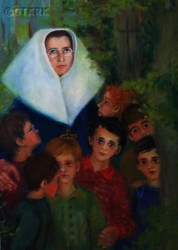
The narrow‐gauge railway was still operational up to Werbkowice, c. 11 km from Hrubieszów. The nuns had to travel the rest of the route — the c. 10 km section from Werbkowice to Turkowice — by hand–operated rail cart. As a witness reported: „Sister Longina always sat on the cart with three boys. Four boys were pushing a cart along the rails. Where there were larger ramps, the sister and the boys would step down to ease the burden of those pushing the cart, or even help push it. The sister constantly scanned the area with a watchful eye, never letting go of her rosary”.
On 15.05.1944, once again went to Werbkowice for food. She was accompanied by eight boys aged 10‐12: six Poles, one Ukrainian, and one Jew, Janusz Sadowski.
On the way back, about halfway, noticed that the filial church in nearby Malice was burning. She stopped and, together with the boys, rushed to save the church. According to various testimonies, an image of the Sacred Heart and liturgical vessels were prob. carried out from the burning church.
The church was set on fire by a unit of the genocidal OUN/UPA passing by. The OUN/UPA report of the incident stated: „A sotnya/unit passing near the railway line captured a Polish woman and seven children, who had been sent on reconnaissance by the Poles. She posed as a kindergarten teacher. After an investigation, they were neutralized”.
The „neutralization” lasted a day.
First, the entire group was herded toward Sahryń, which‐despite the pacification carried out on 10.03.1944, by the AK and BCh‐was still the local center of the OUN/UPA.
She and the boys were interrogated throughout the night at the Sahryń police station. As a result, the Ukrainian boy was released.
The next day, she was forced to dig a hole in a nearby forest.
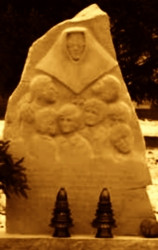
Was shot.
Six Polish boys and a Jewish boy were allegedly murdered with knives and daggers‐prob.
to save on ammunition.
One of the students described the Institute's reaction to the event: „In our minds, Sister Longina resembled the holy martyrs from the first period of Christianity, or even became one of them. And the boys killed with her resembled those brave and saintly youths whom pagan thugs sentenced to death, even sending them to be devoured by lions”. Indeed.
The graves of the murdered were not found until 1975.
And on 12.10.2007, the genocide perpetrator Roman Shukhevych was posthumously awarded the title of Hero of Ukraine. In 12.2020, the Verkhovna Rada of Ukraine, in a resolution, recognized genocide perpetrator Dmitry Klachkivsky as „the leader of the Ukrainian Insurgent Army in Volyn and a participant in the struggle for Ukraine's independence in the 20th century”. In several locations, monuments and commemorative plaques have been erected to these Lat. „hostis humani generis”, the schools were named after them.
Lat. „O Tempora! O mores!”
cause of death
mass murder
perpetrators
Ukrainians
sites and events
«Genocidium Atrox»Click to display the description, Help to the JewsClick to display the description, GeneralgouvernementClick to display the description, Ribbentrop‐MolotovClick to display the description, Pius XI's encyclicalsClick to display the description
date and place
of birth
23.06.1911Birth certification on:
agadd2.home.net.pl
[access: 2026.07.13]
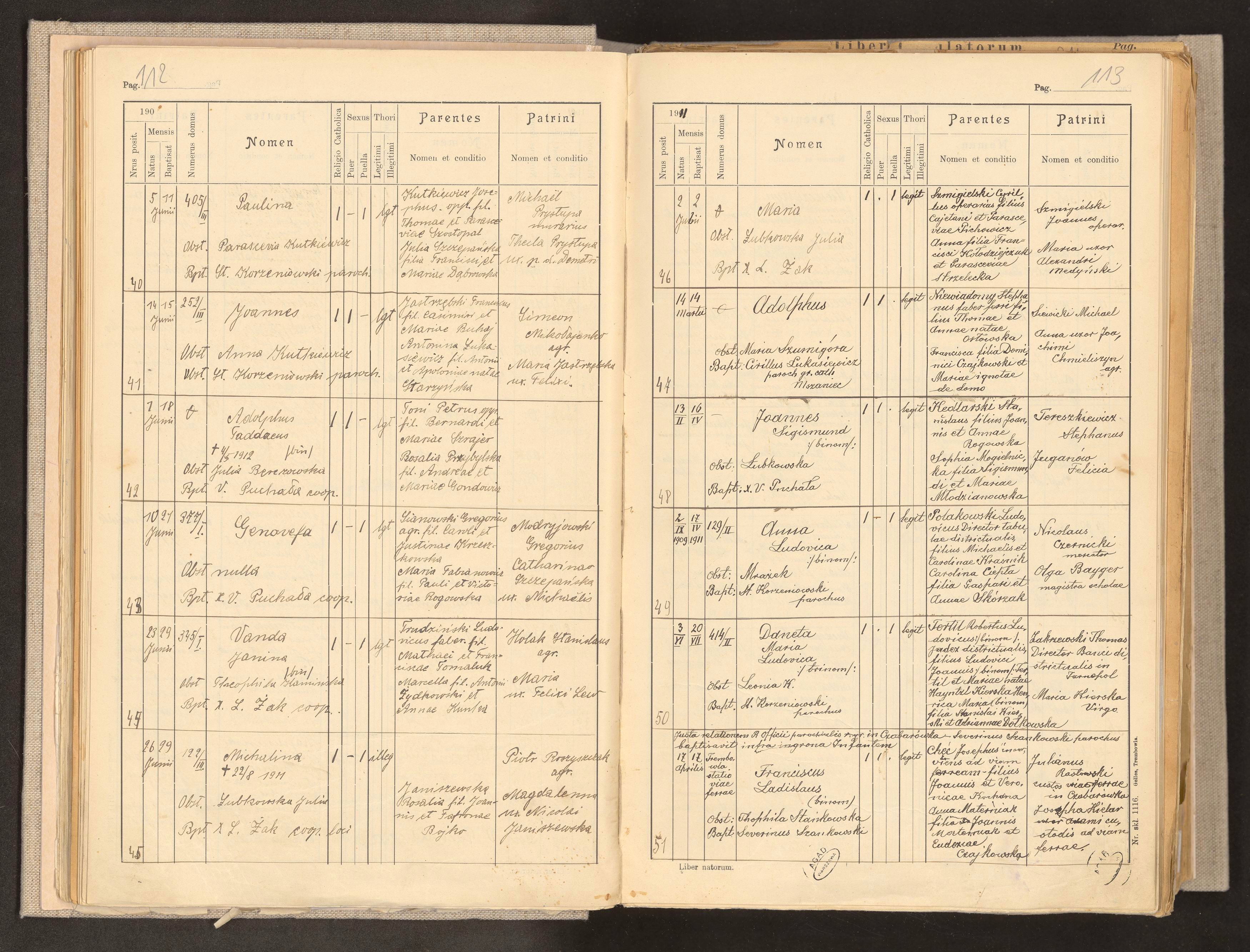

Terebovlyatoday: Terebovlya urban hrom., Ternopil rai., Ternopil obl., Ukraine
more on
en.wikipedia.org
[access: 2020.11.20]
parents
TRUDZIŃSKI Louis
🞲 ?, ? — 🕆 1918, ?

ŻYDKOWSKA Marcella
🞲 ?, ? — 🕆 1918, ?
baptism
29.06.1911Birth certification on:
agadd2.home.net.pl
[access: 2026.07.13]

Terebovlyatoday: Terebovlya urban hrom., Ternopil rai., Ternopil obl., Ukraine
more on
en.wikipedia.org
[access: 2020.11.20]
St Casimir and St Hedwig RC church
religious vows
18.10.1931 (temporary)
19.10.1936 (permanent)
positions held
1933 – 1944
nun — Turkowicetoday: Werbkowice gm., Hrubieszów pov., Lublin voiv., Poland
more on
en.wikipedia.org
[access: 2023.03.12] ⋄ Congregation's house, Sisters Servants of Stara Wieś sł. NMPNP — tutor of a group of 50 boys in the Orphan's Institute run by the Congregation; also: in 1935, a course for educators of children and youth in care institutions held in Poznań, conducted by the Catholic Community School, with the participation of the Poznań Association of Charitable Societies „Caritas” (two one–month courses, separated by internships at the place of service), crowned with an exam and a certificate of completion, certified by delegate of the Ministry of Labor and Social Welfare
c. 1932
nun — Kozlivtoday: Kozliv hrom., Ternopil rai., Ternopil obl., Ukraine
more on
en.wikipedia.org
[access: 2021.12.19] ⋄ Congregation's house, Sisters Servants of Stara Wieś sł. NMPNP — babysitter in an orphanage
1930 – 1931
nun — Turkowicetoday: Werbkowice gm., Hrubieszów pov., Lublin voiv., Poland
more on
en.wikipedia.org
[access: 2023.03.12] ⋄ Congregation's house, Sisters Servants of Stara Wieś sł. NMPNP — tutor help o in the Orphan's Institute run by the Congregation
from 16.10.1929
novitiate — Sisters Servants of Stara Wieś sł. NMPNP
from 12.04.1929
postulate — Sisters Servants of Stara Wieś sł. NMPNP
1929
accession — Sisters Servants of Stara Wieś sł. NMPNP
pupil — Terebovlyatoday: Terebovlya urban hrom., Ternopil rai., Ternopil obl., Ukraine
more on
en.wikipedia.org
[access: 2020.11.20] ⋄ elementary school
others related
in death
KOROBCZUKClick to display biography Leo
sites and events
descriptions
«Genocidium Atrox»: In 1939‐1947, especially in 1943‐1944, independent Ukrainian units, mainly belonging to genocidal Ukrainian organizations OUN (political arm) and UPA (military arm), supported by local Ukrainian population, murdered — often in extremely brutal way — in Volyn and surrounding regions of pre‐war Poland, from 130,000 to 180,000 Poles, all civilians: men, women, children, old and young. Polish‐Ukrainian conflict that openly emerged during and after World War I (in particular resulting in Polish‐Ukrainian war of 1918‐1919), that survived and even deepened later when western Ukraine became a part Poland, exploded again after the outbreak of the World War II in 09.1939. During Russian occupation of 1939‐1941, when hundreds of thousands of Poles were deported into central Russia, when tens of thousands were murdered (during so‐called Katyń massacres, among others), this open conflict had a limited character, helped by the fact that at that time Ukrainians, Ukrainian nationalists in particular, were also persecuted by the Russians. The worst came after German‐Russian war started on 22.06.1941 and German occupation resulted. Initially Ukrainians supported Germans (Ukrainian police was initiated, Ukrainians co—participated in extermination of the Jews and were joining army units fighting alongside Germans). Later when German ambivalent position towards Ukraine became apparent Ukrainians started acting independently. And in 1943 one of the units of aforementioned Ukrainian OUN/UPA organization, in Volyn, started and perpetrated a genocide of Polish population of this region. In mere few weeks OUN/UPA murdered, with Germans passively watching on the sidelines, more than 40,000 Poles. This strategy was consequently approved and adopted by all OUN/UPA organisations and similar genocides took place in Eastern Lesser Poland (part of Ukraine) where more than 20,000 Poles were slaughtered, meeting however with growing resistance from Polish population. Further west, in Chełm, Rzeszów, etc. regions this genocide turned into an extremely bloody conflict. In general genocide, perpetrated by Ukrainian nationalists, partly collaborating with German occupants, on vulnerable Polish population took part in hundreds of villages and small towns, where virtually all Polish inhabitants were wiped out. More than 200 priests, religious and nuns perished in this holocaust — known as «Genocidium Atrox» (Eng. „savage genocide”) The nature and purpose of genocide is perhaps best reflected in the song sung by the murderers: „We will slaughter the Poles, we will cut down the Jews, we must conquer the great Ukraine” (ukr. „Поляків виріжем, Євреїв видусим, велику Україну здобути мусим”). This holocaust and conflict ended up in total elimination of Polish population and Polish culture from Ukraine, in enforced deportations in 1944‐1945 of remaining Poles from Ukraine and some Ukrainians into Ukraine proper, and finally in deportation of Ukrainians from East‐South to the Western parts of Polish republic prl by Commie‐Nazi Russian controlled Polish security forces („Vistula Action”). (more on: www.swzygmunt.knc.plClick to attempt to display webpage
[access: 2021.06.20])
Help to the Jews: During World War II on the Polish occupied territories Germans forbid to give any support to the Jews under penalty of death. E.g., on 15.10.1941, the Germ. Generalgouverneur (Eng. General Governor) of the Germ. Generalgouvernement (Eng. General Governorate), i.e. GG, Hans Frank, issued the „3rd Ordinance on Restrictions on Residence in the General Governorate”, in which §1 stated that: „1) Jews who leave their designated district without authorization are subject to the death penalty. The same penalty applies to persons who knowingly provide such Jews with a hiding place”; and „2) Instigators and accomplices are subject to the same punishment as the perpetrator; an attempted act will be punished as a completed act. In less serious cases, severe imprisonment or prison may be imposed”. This ordinance was further elaborated by the district leaders of GG. E.g., on 10.11.1941, the Germ. Gouverneur (Eng. Governor) of the Germ. Distrikt Warschau (Eng. Warsaw District) in GG, Ludwig Fischer, issued a proclamation stating that: „A Jew who in the future unauthorizedly leaves the residential district assigned to him will be punished with death”. And added: „The same punishment applies to anyone who knowingly provides shelter to such Jews or helps them in any other way (e.g., by providing accommodation, board, by taking them on vehicles of any kind, etc.)”. In practice, this meant that responsibility for hiding Jews rested not only with the owners of the premises, but also with all the people being there, generally the family of the person hiding them. When at the turn of 1941/1942 the Germans began to implement the genocidal plan Germ. Endlösung der Judenfrage (Eng. Final Solution of the Jewish Question), when the deportation of Jews from the Warsaw ghetto to the Germ. Vernichtungslager (Eng. extermination camp) VL Treblinka was underway, the Polish writer Sophie Kossak–Szczucka on 11.08.1942 issued an appeal „Protest!”, published in the underground press in a circulation of 5,000 copies. She wrote: „The world looks at this crime, more terrible than anything history has ever seen, and — it remains silent […] This silence cannot be tolerated any longer. Whatever its motives — it is despicable. We cannot remain passive in the face of crime. Whoever remains silent in the face of murder becomes an accomplice to the murderer. Whoever does not condemn, consents. Therefore, we, Catholics — Poles, are speaking out. Our feelings towards Jews have not changed. We do not cease to consider them political, economic, and ideological enemies of Poland. Moreover, we realize that they hate us more than they hate Germans […] Awareness of these feelings, however, does not release us from the obligation to condemn the crime […] Whoever does not understand this, whoever would dare to link Poland's proud, free future with the despicable joy of their neighbor's misfortune — is therefore neither a Catholic nor a Pole!” The „Protest” was signed by the „Front for the Rebirth of Poland”, i.e. FOP, a clandestine Catholic organization that was a continuation of Catholic Action during the German occupation. On 27.09.1942, the Polish Clandestine State, the largest resistance organization in German–occupied Europe, at the initiative of Sophie Kossak–Szczucka and Wanda Krahelska–Filipowicz, a member of the Polish Socialist Party, established the Provisional Committee to Aid Jews. On 04.12.1942, the Council to Aid Jews at the Polish Government Delegature in occupied Poland, codenamed „Conrad Żegota”, was established in its place. Hundreds of Polish priests and religious extended help to the Jews, under threat of life. Many of them were caught and murdered.
Generalgouvernement: After the Polish defeat in the 09.1939 campaign, which was the result of the Ribbentrop‐Molotov Pact and constituted the first stage of World War II, and the beginning of German occupation in part of Poland (in the other, eastern part of Poland, the Russian occupation began), the Germans divided the occupied Polish territory into five main regions. In two of them new German provinces were created, two other were incorporated into other provinces. However, the fifth part was treated separately, and in a political sense it was supposed to recreate the German idea from 1915 (during World War I, after the defeat of the Russians in the Battle of Gorlice in 05.1915) of creating a Polish enclave within Germany. Illegal in the sense of international law, i.e. Hague Convention, and public law, managed by the Germans according to separate laws — especially established for the Polish Germ. Untermenschen (Eng. subhumans) — till the Russian offensive in 1945 it constituted part of the Germ. Großdeutschland (Eng. Greater Germany). Till 31.07.1940 formally called Germ. Generalgouvernement für die besetzten polnischen Gebiete (Eng. General Government for the occupied Polish lands) — later simply Germ. Generalgouvernement (Eng. General Governorate), as in the years 1915‐1918. From 07.1941, i.e. after the German attack on 22.06.1941 against the erstwhile ally, the Russians, it also included the Galicia district, i.e. the Polish pre‐war south‐eastern voivodeships. A special criminal law was enacted and applied to Poles and Jews, allowing for the arbitrary administration of the death penalty regardless of the age of the „perpetrator”, and sanctioning the use of collective responsibility. After the end of the military conflict of the World War UU, the government of the Germ. Generalgouvernement was recognized as a criminal organization, and its leader, governor Hans Frank, guilty of war crimes and crimes against humanity and executed. (more on: en.wikipedia.orgClick to attempt to display webpage
[access: 2024.12.13])
Ribbentrop‐Molotov: Genocidal Russian‐German alliance pact between Russian leader Joseph Stalin and German leader Adolf Hitler signed on 23.08.1939 in Moscow by respective foreign ministers, Mr. Vyacheslav Molotov for Russia and Joachim von Ribbentrop for Germany. The pact sanctioned and was the direct cause of joint Russian and German invasion of Poland and the outbreak of the World War II in 09.1939. In a political sense, the pact was an attempt to restore the status quo ante before 1914, with one exception, namely the „commercial” exchange of the so‐called „Kingdom of Poland”, which in 1914 was part of the Russian Empire, fore Eastern Galicia (today's western Ukraine), in 1914 belonging to the Austro‐Hungarian Empire. Galicia, including Lviv, was to be taken over by the Russians, the „Kingdom of Poland” — under the name of the General Governorate — Germany. The resultant „war was one of the greatest calamities and dramas of humanity in history, for two atheistic and anti‐Christian ideologies — national and international socialism — rejected God and His fifth Decalogue commandment: Thou shall not kill!” (Abp Stanislav Gądecki, 01.09.2019). The decisions taken — backed up by the betrayal of the formal allies of Poland, France and Germany, which on 12.09.1939, at a joint conference in Abbeville, decided not to provide aid to attacked Poland and not to take military action against Germany (a clear breach of treaty obligations with Poland) — were on 28.09.1939 slightly altered and made more precise when a treaty on „German‐Russian boundaries and friendship” was agreed by the same murderous signatories. One of its findings was establishment of spheres of influence in Central and Eastern Europe and in consequence IV partition of Poland. In one of its secret annexes agreed, that: „the Signatories will not tolerate on its respective territories any Polish propaganda that affects the territory of the other Side. On their respective territories they will suppress all such propaganda and inform each other of the measures taken to accomplish it”. The agreements resulted in a series of meeting between two genocidal organization representing both sides — German Gestapo and Russian NKVD when coordination of efforts to exterminate Polish intelligentsia and Polish leading classes (in Germany called «Intelligenzaktion», in Russia took the form of Katyń massacres) where discussed. Resulted in deaths of hundreds of thousands of Polish intelligentsia, including thousands of priests presented here, and tens of millions of ordinary people,. The results of this Russian‐German pact lasted till 1989 and are still in evidence even today. (more on: en.wikipedia.orgClick to attempt to display webpage
[access: 2015.09.30])
Pius XI's encyclicals: Facing the creation of two totalitarian systems in Europe, which seemed to compete with each other, though there were more similarities than contradictions between them, Pope Pius XI issued in 03.1937 (within 5 days) two encyclicals. In the „Mit brennender Sorge” (Eng. „With Burning Concern”) published on 14.03.1938, condemned the national socialism prevailing in Germany. The Pope wrote: „Whoever, following the old Germanic‐pre‐Christian beliefs, puts various impersonal fate in the place of a personal God, denies the wisdom of God and Providence […], whoever exalts earthly values: race or nation, or state, or state system, representatives of state power or other fundamental values of human society, […] and makes them the highest standard of all values, including religious ones, and idolizes them, this one […] is far from true faith in God and from a worldview corresponding to such faith”. On 19.03.1937, published „Divini Redemptoris” (Eng. „Divine Redeemer”), in which criticized Russian communism, dialectical materialism and the class struggle theory. The Pope wrote: „Communism deprives man of freedom, and therefore the spiritual basis of all life norms. It deprives the human person of all his dignity and any moral support with which he could resist the onslaught of blind passions […] This is the new gospel that Bolshevik and godless communism preaches as a message of salvation and redemption of humanity”… Pius XI demanded that the established human law be subjected to the natural law of God , recommended the implementation of the ideal of a Christian state and society, and called on Catholics to resist. Two years later, National Socialist Germany and Communist Russia came together and started World War II. (more on: www.vatican.vaClick to attempt to display webpage
[access: 2023.05.28], www.vatican.vaClick to attempt to display webpage
[access: 2023.05.28])
sources
personal:
nawolyniu.plClick to attempt to display webpage
[access: 2013.01.06], cracovia-leopolis.plClick to attempt to display webpage
[access: 2013.01.06], newsaints.faithweb.comClick to attempt to display webpage
[access: 2023.09.10], agadd2.home.net.plClick to attempt to display webpage
[access: 2026.07.13], www.sluzebniczkinmp.plClick to attempt to display webpage
[access: 2013.01.13], pl.aleteia.orgClick to attempt to display webpage
[access: 2026.07.13], www.scribd.comClick to attempt to display webpage
[access: 2026.07.13]
bibliographical:
„A martyrology of Polish clergy under German occupation, 1939‐1945”, Fr Szołdrski Vladislaus CSSR, Rome 1965
„Catholic nuns — victims of crimes of Ukrainian nationalists in Lviv metropolis of the Latin rite in 1939‐1947”, Sr Agnes Michna, IPN, Warsaw, 2010
„Mysterium iniquitatis. Clergy and religious of the Latin rite murdered by Ukrainian nationalists in 1939‐1945”, Fr Józef Marecki, Institute of National Remembrance IPN, Kraków 2020
„Genocidium Atrox”, GTKRK, https://www.swzygmunt.knc.pl/GENOCIDEs/15 GENOCIDUM ATROX/vPOLISH/MAINs/GENATROXsearch01.htm
original images:
www.duszki.plClick to attempt to display webpage
[access: 2013.05.19], www.sluzebniczkinmp.plClick to attempt to display webpage
[access: 2018.09.02], www.sluzebniczkinmp.plClick to attempt to display webpage
[access: 2018.09.02], www.sluzebniczkinmp.plClick to attempt to display webpage
[access: 2018.09.02]
LETTER to CUSTODIAN/ADMINISTRATOR
If you have an Email client on your communicator/computer — such as Mozilla Thunderbird, Windows Mail or Microsoft Outlook, described at WikipediaPatrz:
en.wikipedia.org, among others — try the link below, please:
LETTER to CUSTODIAN/ADMINISTRATORClick and try to call your own Email client
If however you do not run such a client or the above link is not active please send an email to the Custodian/Administrator using your account — in your customary email/correspondence engine — at the following address:

giving the following as the subject:
MARTYROLOGY: TRUDZIŃSKA Wanda Janet
To return to the biography press below:
 Click to return to biography