Roman Catholic
St Sigismund parish
05-507 Słomczyn
85 Wiślana Str.
Konstancin deanery
Warsaw archdiocese, Poland


full list:
displayClick to display full list

searchClick to search full list by categories
wyświetlKliknij by wyświetlić pełną listę po polsku

szukajKliknij by przeszukać listę wg kategorii po polsku

Martyrology of the clergy — Poland
XX century (1914 – 1989)
personal data
surname
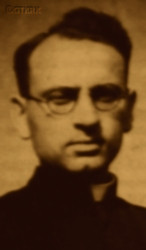
ZUBA
forename(s)
Joseph (pl. Józef)
function
diocesan priest
creed
Latin (Roman Catholic) Church RCmore on
en.wikipedia.org
[access: 2014.09.21]
diocese / province
Przemyśl diocesemore on
www.przemyska.pl
[access: 2013.02.15]
RC Military Ordinariate of Polandmore on
en.wikipedia.org
[access: 2014.12.20]
date and place
of death
15.07.1948

Wielowieśtoday: urban district, Tarnobrzeg city pov., Subcarpathia voiv., Poland
more on
en.wikipedia.org
[access: 2021.10.09]
alt. dates and places
of death
16.06.1948,28.01.1948,04.1949
Maków Podhalańskitoday: Maków Podhalański gm., Sucha Beskidzka pov., Lesser Poland voiv., Poland
more on
en.wikipedia.org
[access: 2021.06.07]
details of death
When began his ministry in 1938 in the parish of Wielowieś, located on the right bank of the Vistula, c. 8 km northeast of center of Tarnobrzeg, then in Tarnobrzeg county of Lviv Voivodeship, the village of Wielowieś had c. 1,300 inhabitants, apart from c. 30 Jews c. 97% Roman Catholic Poles. The parish had a total of c. 4,000 faithful, and there were 5 primary schools within its territory.
In 09.1939, when the Germans and Russians, pursuant to the genocidal German–Russian agreement of 23.08.1939, known as the Molotov–Ribbentrop Pact, confirmed on 28.09.1939 by the so‐called „Treaty on the Borders and Friendship between Germany and Russia”, also known as the second Molotov–Ribbentrop Pact, attacked Poland and World War II began, the parish found itself in the part of the Przemyśl diocese occupied by the Germans. Administratively, it was incorporated into the Germ. Kreishauptmannschaft Dębica (Eng. Dębica County), part of the Germ. Distrikt Krakau (Eng. District of Kraków), within the German‐occupied and run quasi‐state called the Germ. Generalgouvernement (Eng. General Governorate), i.e. GG.
In 10.1939, witnessed the expulsion of Jews from Tarnobrzeg. In 1939, this town had a population of c. 5,900, of which Jews constituted c. 48%, i.e. 2,800 people. The rest, c. 50%, were Poles. Earlier, in 09.1939, during the Polish defensive war, and immediately after the beginning of the German occupation, many refugees from other regions of Poland appeared in Tarnobrzeg. The number of Jews increased to over 4,000. On Monday, 02.10.1939, Germans gathered c. 4,000 of them in the town square. As the Jewish „Encyclopedia of Camps and Ghettos” describes it: „the Germans ordered all the Jews to assemble in the marketplace (Rynek), bringing with them all their valuable belongings […] Members of the SS lined the Jews up in rows, at the end of which there was a table manned by a German officer. The Jews were then robbed of all their valuable possessions and brutally beaten. They were stripped naked, medically examined by a doctor, and forced to sign a document, declaring their voluntary evacuation from the town. Subsequently the Jews were divided into groups of 500 to 600 people and were marched towards Radomyśl nad Sanem […] After marching for three days in the pouring rain, those who arrived at the riverbank were forced onto rafts by members of the Gestapo and pushed into the water. Many people drowned, and those who turned back seeking help, including women and children, were shot at by the Gestapo. During this expulsion Aktion, dozens of Jews were killed or drowned in the river. Most made it across to Radomyśl [on the right bank of the San] but soon were forced to move on in the direction of Lwów, as the area around Radomyśl was about to be handed over to the Germans […] Most of those who remained under Soviet rule were deported to the Soviet interior in 1940 or 1941, an action that may have saved their lives”. The march of Jews towards Radomyśl, north‐east of Tarnobrzeg, had to pass through Wielowieś.
A month later, on 03.11.1939, was arrested by the Germans, prob. by the Germ. Geheime Staatspolizei (Eng. Secret State Police), i.e. Gestapo, from Tarnobrzeg. Transported to Rzeszów and held in prison there. Released after two weeks.
In the first years of the occupation, the Germans subjected Poles, including the Catholic Church and the intelligentsia, to particular repression. The details were specified at four so‐called thematic conferences, when the Germ. Geheime Staatspolizei (Eng. Secret State Police), i.e. Gestapo, and the Rus. Народный Комиссариат Внутренних Дел (Eng. People's Commissariat of Internal Affairs), i.e. NKVD, two genocidal allied organizations, debated cooperation and ways of combating and exterminating Poles in the territories they occupied. The first took place on 27.11.1939 in Brest‐on‐the‐Bug; the second immediately afterwards in Przemyśl. The third was held on 20.02.1940 in Zakopane, in the villas „Pan Tadeusz” (Eng. „Sir Thaddeus”) and „Telimena”, the fourth in 03.1940 in Kraków. In the meantime, at the beginning of 02.1940, in Hermann Göring's hunting lodge in Rominty in the Romincka Forest, a meeting of two génocidaires, Heinrich Himmler and Lavrentiy Beria, took place, where the decision to exterminate Polish society and combat the Polish resistance movement was probably finalized. As a consequence, in 04.1940, almost simultaneously, the genocidal murders of Polish prisoners of war began in Russia, which went down in history as the «Katyn genocide», and in the German‐occupied and run quasi‐state called the Germ. Generalgouvernement (Eng. General Governorate), i.e. GG, the Germ. Außerordentliche Befriedungsaktion (Eng. Extraordinary Pacification Action) began, i.e. «Aktion AB», which was part of the so‐called Germ. «Intelligenzaktion» (Eng. Operation Intelligentsia), aimed at exterminating Polish political and intellectual elites.
At the same time, the source of German law, i.e. in GG, became the memorandum Germ. „Die Frage der Behandlung der Bevölkerung der ehemaligen polnischen Gebiete nach rassepolitischen Gesichtspunkten” (Eng. „The Treatment of the Population of the Former Polish Territories from the Point of View of Racial Policy”), issued on 28.09.1939 by two officials of the German Central Germ. Rassenpolitisches Amt der NSDAP (Eng. National Office of Racial Policy), Erhard Wetzel and Günther Hecht — both with doctoral degrees, of course: the former in law, the latter in herpetology, i.e. the branch of zoology that studies amphibians and reptiles — based on the guidelines articulated two days earlier by the German socialist leader, Adolf Hitler. These outstanding representatives of the „master race” wrote in it i.a. that in the occupied Polish territories: „Universities and other higher education institutions, vocational schools and secondary schools have always been centers of Polish chauvinistic upbringing and therefore should be closed altogether. Only elementary schools should be allowed, which should teach only the most primitive things: arithmetic, reading and writing. Education in nationally important subjects, such as geography, history, the history of literature, and gymnastics, must be banned”. Even religious education higher than elementary has become illegal.
Became then involved in collaboration with the emerging Polish resistance movement. The most dynamic group in the area was the clandestine organization Pl. „Odwet” (Eng. „Revenge”) — from the name of the clandestine weekly, printed with a mimeograph technique with a circulation of c. 10,000 copies — commanded by Polish teacher and scout instructor Vladislav John Jasiński, nom de guerre Jędruś, hence the colloquial nickname of the group „Jędrusie”. The group was affiliated with the Union of Armed Struggle ZWZ — transformed into the Home Army AK on 14.02.1942 — part of the emerging Polish Clandestine State, the largest resistance movement in occupied Europe.
One of the activities of the Polish Clandestine State was organizing clandestine education for Polish children and youth. Participated in this effort. Taught children i.a. at a school in the parish village of Sobów.
In 1941, the persecution of Jews intensified. In 02.1941, there were c. 320 Jews in Tarnobrzeg, among them those who had somehow avoided deportation to the areas occupied by the Russians in 1939. There prob. was also a Germ. Judenviertel (Eng. Jewish quarter), which was de facto an open ghetto, i.e. without a surrounding fence. Some sources state that in 06.1941 a formal ghetto was established, with the Germ. Judenrat (Eng. Jewish Council) — that is, at the very moment when the Germans on 22.06.1941 attacked their erstwhile ally, the Russians. At the turn of 1941/1942 the number of Jews in Tarnobrzeg increased, in connection with the expulsion of Jews from Jarosław, Rozwadów and surrounding villages — it is not known whether the Jews living in his parish in 1939 were then exiled to the ghetto in Tarnobrzeg, or perhaps were deported to the east already in 10.1939. The concentration of Jews was prob. related to the decree of the Germ. Generalgouverneur (Eng. General Governor) of the GG, Hans Frank, in force from 25.10.1941, according to which „Jews who leave their assigned district without authorization are subject to the death penalty. The same punishment applies to persons who knowingly provide such Jews with a hiding place”, and „Instigators and accomplices are subject to the same punishment as the perpetrator; an attempted act will be punished as a completed act. In less serious cases, severe imprisonment or imprisonment may be imposed”.
And at the beginning of 1942, the Germans began to implement the genocidal plan Germ. «Endlösung der Judenfrage» (Eng. Final Solution of the Jewish Question), which in the GG was codenamed Germ. «Aktion Reinhardt» (Eng. Operation Reinhardt). The liquidation of the ghetto in Tarnobrzeg took place on 19.07.1942. German genocidal Germ. Die Schutzstaffel der NSDAP (Eng. NSDAP Protection Squad), i.e. «SS», a paramilitary formation subordinate to the ruling National Socialist German Workers' Party NSDAP in Germany, and the Germ. Gendarmerie (Eng. gendarmerie) expelled Jews from their homes early in the morning and carried out a selection. The elderly and sick were herded to the Jewish cemetery and murdered there. The rest were driven to Baranów Sandomierski, c. 15 km to the south, and from there on 21‐22.07.1942, to Dębica, c. 55 km to the south. Finally, on 24.07.1942, most of them were deported to the Germ. Vernichtungslager (Eng. extermination camp) VL Belzec and murdered there.
A few Jews managed to hide. Was to extend help to some of them. Provided them with food.
On 03‐05.08.1944, the German occupation ended and, as part of the offensive known as the Lviv–Sandomierz Operation, the Russians entered Tarnobrzeg. A few days earlier, they had crossed the Vistula River, creating the so‐called Baranów–Sandomierz Bridgehead, only to halt the offensive for almost half a year a few days later. On the orders of the highest Russian authorities, de facto in a momentary strategic collusion with the Germans, the Russians gave the Germans time to suppress the Warsaw Uprising, which had been initiated on 01.08.1944, by the Polish Clandestine State under Operation Pl. „Burza” (Eng. „Tempest”), and to murder c. 200,000 Poles.
At that time, the decisions of the main leaders of the anti‐German coalition — the USA, Great Britain, and Russia — at the Tehran Conference of 28.11‐01.12.1943, when the Allies agreed to establish the post‐war Polish eastern border along the Curzon–Namier line, divide Poland, and award Russia the areas it had seized in 09.1939, i.e. de facto recognizing the legitimacy of the Russian invasion of Poland in 09.1939 and the Russian claims expressed in the Molotov–Ribbentrop Pact of 1939, were not yet known. The Curzon–Namier line was a demarcation line between Poland and the Russian Bolsheviks, proposed to the Russians on 11.07.1920, by the British Foreign Secretary, George Curzon, during the great Russian offensive during the Polish–Russian War of 1919‐1921, suggested by the so‐called expert, Lewis Bernstein Namier, a Jew of Polish origin. Russia — contrary to the plans of the British imperialists — suffered defeat in 1920, but the concept of the Curzon–Namier line, running through the center of Poland, became a cause célèbre for all imperialists for the division of Central Europe, especially the Russian and German ones. It was not known that the Allies had decided that after the end of the war, a truncated Poland would fall within the Russian sphere of influence, which de facto meant the takeover of power in the new Russian Polish republic, called the „prl”, by Russian‐controlled agents and traitors.
Tarnobrzeg experienced a new reality as early as 09.1944. The Russian genocidal NKVD, aided by agents of the so‐called Ministry of Public Security of „prl”, i.e. UB, began arresting AK members — both from local structures and those moving towards Warsaw, in an attempt to aid the Warsaw Uprising — on charges … of collaborating with the Germans. They were held in the basements of houses occupied by the Russians and then sent deep into Russia, „to Siberia”, to Russian Gulag concentration camps of forced slave labor. Many simply disappeared without a trace. Thus began the Russian occupation.
The AK and the Polish Clandestine State did not passively submit to the imposed Russian order. And so, on 02.11.1944, a AK soldier, Casimir Thomas Bogacz, nom de guerre „Blawat”, broke into the UB detention center in Tarnobrzeg, freeing 15 of his subordinates. And then, on 12.01.1945, when after the fall of the Warsaw Uprising, another Russian offensive, known as the Vistula–Oder Operation, finally began; when the Home Army AK was disbanded on 19.01.1945; the Anti‐Soviet Uprising began as a result of the intensifying Russian repression of former soldiers and members of the Polish Clandestine Underground State by the Russian occupier and its Polish agents from the „prl”. Until the 1950s, the lonely „cursed soldiers” — this is the term given to them by history — fought against the new occupiers.
As reported by the Institute of National Remembrance IPN, „in 1948, [the Commie‐Nazis] began openly fighting the Church for influence among the youth […] They then initiated the operation to educate a "new man" according to the patterns of the so‐called socialist morality tested in [Soviet Russia], which was characterized by moral relativism […] They stated that […] "in the Mielec district [neighboring Tarnobrzeg], the clergy are trying to break up the weaker organizations of the [Commie‐Nazi] Party. During confessions, priests persuade women to force their husbands to leave the Party. This method yields certain results. Local party organizations are clearly under the influence of the clergy's activities" […] In June and July 1948, the party conducted propaganda campaigns against the clergy at all its meetings. These actions coincided with the desecration by "unknown perpetrators" of several roadside chapels depicting saints”.
And it was then that was murdered.
Lured from the rectory into the garden and shot there.
The perpetrators were never discovered.
Prob. was murdered by the Polish Commie‐Nazi Security Service UB, part of the Russian criminal MGB. According to the widely held opinion at the time, was killed out of revenge, by „godless persons”.
alt. details of death
According to some sources his death should be viewed in the light of «Genocidium Atrox» — the genocide perpetrated by Ukrainians, known as „Volyn genocide”.
cause of death
murder
perpetrators
Russians / Poles
sites and events
«Genocidium Atrox»Click to display the description, Help to the JewsClick to display the description, GeneralgouvernementClick to display the description, Ribbentrop‐MolotovClick to display the description, Pius XI's encyclicalsClick to display the description
date and place
of birth
26.03.1910

Pogwizdów Starytoday: Głogów Małopolski gm., Rzeszów pov., Subcarpathia voiv., Poland
more on
en.wikipedia.org
[access: 2021.10.09]
alt. dates and places
of birth
14.03.1910
Pogwizdówtoday: Poland
presbyter (holy orders)
ordination
20.06.1937

Przemyśltoday: Przemyśl city pov., Subcarpathia voiv., Poland
more on
en.wikipedia.org
[access: 2021.04.01]
Assumption of the Blessed Virgin Mary and St John the Baptist RC cathedral churchmore on
en.wikipedia.org
[access: 2025.03.14]
positions held
1938 – 1948
vicar — Wielowieśtoday: urban district, Tarnobrzeg city pov., Subcarpathia voiv., Poland
more on
en.wikipedia.org
[access: 2021.10.09] ⋄ St Gertrudis the Virgin RC parish ⋄ Miechocintoday: urban district, Tarnobrzeg city pov., Subcarpathia voiv., Poland
more on
en.wikipedia.org
[access: 2021.10.09] RC deanery — also: prefekt at primary school in Sobów
1937 – 1938
vicar — Tarnawiectoday: Kuryłówka ‐ Polski Koniec, Kuryłówka gm., Leżajsk pov., Subcarpathia voiv., Poland
more on
en.wikipedia.org
[access: 2021.09.29] ⋄ St Joseph Spouse of the Blessed Virgin Mary RC parish ⋄ Leżajsktoday: Leżajsk urban gm., Leżajsk pov., Subcarpathia voiv., Poland
more on
en.wikipedia.org
[access: 2021.10.09] RC deanery
till 1936
student — Przemyśltoday: Przemyśl city pov., Subcarpathia voiv., Poland
more on
en.wikipedia.org
[access: 2021.04.01] ⋄ philosophy and theology, Theological Seminary
sites and events
descriptions
«Genocidium Atrox»: In 1939‐1947, especially in 1943‐1944, independent Ukrainian units, mainly belonging to genocidal Ukrainian organizations OUN (political arm) and UPA (military arm), supported by local Ukrainian population, murdered — often in extremely brutal way — in Volyn and surrounding regions of pre‐war Poland, from 130,000 to 180,000 Poles, all civilians: men, women, children, old and young. Polish‐Ukrainian conflict that openly emerged during and after World War I (in particular resulting in Polish‐Ukrainian war of 1918‐1919), that survived and even deepened later when western Ukraine became a part Poland, exploded again after the outbreak of the World War II in 09.1939. During Russian occupation of 1939‐1941, when hundreds of thousands of Poles were deported into central Russia, when tens of thousands were murdered (during so‐called Katyń massacres, among others), this open conflict had a limited character, helped by the fact that at that time Ukrainians, Ukrainian nationalists in particular, were also persecuted by the Russians. The worst came after German‐Russian war started on 22.06.1941 and German occupation resulted. Initially Ukrainians supported Germans (Ukrainian police was initiated, Ukrainians co—participated in extermination of the Jews and were joining army units fighting alongside Germans). Later when German ambivalent position towards Ukraine became apparent Ukrainians started acting independently. And in 1943 one of the units of aforementioned Ukrainian OUN/UPA organization, in Volyn, started and perpetrated a genocide of Polish population of this region. In mere few weeks OUN/UPA murdered, with Germans passively watching on the sidelines, more than 40,000 Poles. This strategy was consequently approved and adopted by all OUN/UPA organisations and similar genocides took place in Eastern Lesser Poland (part of Ukraine) where more than 20,000 Poles were slaughtered, meeting however with growing resistance from Polish population. Further west, in Chełm, Rzeszów, etc. regions this genocide turned into an extremely bloody conflict. In general genocide, perpetrated by Ukrainian nationalists, partly collaborating with German occupants, on vulnerable Polish population took part in hundreds of villages and small towns, where virtually all Polish inhabitants were wiped out. More than 200 priests, religious and nuns perished in this holocaust — known as «Genocidium Atrox» (Eng. „savage genocide”) The nature and purpose of genocide is perhaps best reflected in the song sung by the murderers: „We will slaughter the Poles, we will cut down the Jews, we must conquer the great Ukraine” (ukr. „Поляків виріжем, Євреїв видусим, велику Україну здобути мусим”). This holocaust and conflict ended up in total elimination of Polish population and Polish culture from Ukraine, in enforced deportations in 1944‐1945 of remaining Poles from Ukraine and some Ukrainians into Ukraine proper, and finally in deportation of Ukrainians from East‐South to the Western parts of Polish republic prl by Commie‐Nazi Russian controlled Polish security forces („Vistula Action”). (more on: www.swzygmunt.knc.plClick to attempt to display webpage
[access: 2021.06.20])
Help to the Jews: During World War II on the Polish occupied territories Germans forbid to give any support to the Jews under penalty of death. E.g., on 15.10.1941, the Germ. Generalgouverneur (Eng. General Governor) of the Germ. Generalgouvernement (Eng. General Governorate), i.e. GG, Hans Frank, issued the „3rd Ordinance on Restrictions on Residence in the General Governorate”, in which §1 stated that: „1) Jews who leave their designated district without authorization are subject to the death penalty. The same penalty applies to persons who knowingly provide such Jews with a hiding place”; and „2) Instigators and accomplices are subject to the same punishment as the perpetrator; an attempted act will be punished as a completed act. In less serious cases, severe imprisonment or prison may be imposed”. This ordinance was further elaborated by the district leaders of GG. E.g., on 10.11.1941, the Germ. Gouverneur (Eng. Governor) of the Germ. Distrikt Warschau (Eng. Warsaw District) in GG, Ludwig Fischer, issued a proclamation stating that: „A Jew who in the future unauthorizedly leaves the residential district assigned to him will be punished with death”. And added: „The same punishment applies to anyone who knowingly provides shelter to such Jews or helps them in any other way (e.g., by providing accommodation, board, by taking them on vehicles of any kind, etc.)”. In practice, this meant that responsibility for hiding Jews rested not only with the owners of the premises, but also with all the people being there, generally the family of the person hiding them. When at the turn of 1941/1942 the Germans began to implement the genocidal plan Germ. Endlösung der Judenfrage (Eng. Final Solution of the Jewish Question), when the deportation of Jews from the Warsaw ghetto to the Germ. Vernichtungslager (Eng. extermination camp) VL Treblinka was underway, the Polish writer Sophie Kossak–Szczucka on 11.08.1942 issued an appeal „Protest!”, published in the underground press in a circulation of 5,000 copies. She wrote: „The world looks at this crime, more terrible than anything history has ever seen, and — it remains silent […] This silence cannot be tolerated any longer. Whatever its motives — it is despicable. We cannot remain passive in the face of crime. Whoever remains silent in the face of murder becomes an accomplice to the murderer. Whoever does not condemn, consents. Therefore, we, Catholics — Poles, are speaking out. Our feelings towards Jews have not changed. We do not cease to consider them political, economic, and ideological enemies of Poland. Moreover, we realize that they hate us more than they hate Germans […] Awareness of these feelings, however, does not release us from the obligation to condemn the crime […] Whoever does not understand this, whoever would dare to link Poland's proud, free future with the despicable joy of their neighbor's misfortune — is therefore neither a Catholic nor a Pole!” The „Protest” was signed by the „Front for the Rebirth of Poland”, i.e. FOP, a clandestine Catholic organization that was a continuation of Catholic Action during the German occupation. On 27.09.1942, the Polish Clandestine State, the largest resistance organization in German–occupied Europe, at the initiative of Sophie Kossak–Szczucka and Wanda Krahelska–Filipowicz, a member of the Polish Socialist Party, established the Provisional Committee to Aid Jews. On 04.12.1942, the Council to Aid Jews at the Polish Government Delegature in occupied Poland, codenamed „Conrad Żegota”, was established in its place. Hundreds of Polish priests and religious extended help to the Jews, under threat of life. Many of them were caught and murdered.
Generalgouvernement: After the Polish defeat in the 09.1939 campaign, which was the result of the Ribbentrop‐Molotov Pact and constituted the first stage of World War II, and the beginning of German occupation in part of Poland (in the other, eastern part of Poland, the Russian occupation began), the Germans divided the occupied Polish territory into five main regions. In two of them new German provinces were created, two other were incorporated into other provinces. However, the fifth part was treated separately, and in a political sense it was supposed to recreate the German idea from 1915 (during World War I, after the defeat of the Russians in the Battle of Gorlice in 05.1915) of creating a Polish enclave within Germany. Illegal in the sense of international law, i.e. Hague Convention, and public law, managed by the Germans according to separate laws — especially established for the Polish Germ. Untermenschen (Eng. subhumans) — till the Russian offensive in 1945 it constituted part of the Germ. Großdeutschland (Eng. Greater Germany). Till 31.07.1940 formally called Germ. Generalgouvernement für die besetzten polnischen Gebiete (Eng. General Government for the occupied Polish lands) — later simply Germ. Generalgouvernement (Eng. General Governorate), as in the years 1915‐1918. From 07.1941, i.e. after the German attack on 22.06.1941 against the erstwhile ally, the Russians, it also included the Galicia district, i.e. the Polish pre‐war south‐eastern voivodeships. A special criminal law was enacted and applied to Poles and Jews, allowing for the arbitrary administration of the death penalty regardless of the age of the „perpetrator”, and sanctioning the use of collective responsibility. After the end of the military conflict of the World War UU, the government of the Germ. Generalgouvernement was recognized as a criminal organization, and its leader, governor Hans Frank, guilty of war crimes and crimes against humanity and executed. (more on: en.wikipedia.orgClick to attempt to display webpage
[access: 2024.12.13])
Ribbentrop‐Molotov: Genocidal Russian‐German alliance pact between Russian leader Joseph Stalin and German leader Adolf Hitler signed on 23.08.1939 in Moscow by respective foreign ministers, Mr. Vyacheslav Molotov for Russia and Joachim von Ribbentrop for Germany. The pact sanctioned and was the direct cause of joint Russian and German invasion of Poland and the outbreak of the World War II in 09.1939. In a political sense, the pact was an attempt to restore the status quo ante before 1914, with one exception, namely the „commercial” exchange of the so‐called „Kingdom of Poland”, which in 1914 was part of the Russian Empire, fore Eastern Galicia (today's western Ukraine), in 1914 belonging to the Austro‐Hungarian Empire. Galicia, including Lviv, was to be taken over by the Russians, the „Kingdom of Poland” — under the name of the General Governorate — Germany. The resultant „war was one of the greatest calamities and dramas of humanity in history, for two atheistic and anti‐Christian ideologies — national and international socialism — rejected God and His fifth Decalogue commandment: Thou shall not kill!” (Abp Stanislav Gądecki, 01.09.2019). The decisions taken — backed up by the betrayal of the formal allies of Poland, France and Germany, which on 12.09.1939, at a joint conference in Abbeville, decided not to provide aid to attacked Poland and not to take military action against Germany (a clear breach of treaty obligations with Poland) — were on 28.09.1939 slightly altered and made more precise when a treaty on „German‐Russian boundaries and friendship” was agreed by the same murderous signatories. One of its findings was establishment of spheres of influence in Central and Eastern Europe and in consequence IV partition of Poland. In one of its secret annexes agreed, that: „the Signatories will not tolerate on its respective territories any Polish propaganda that affects the territory of the other Side. On their respective territories they will suppress all such propaganda and inform each other of the measures taken to accomplish it”. The agreements resulted in a series of meeting between two genocidal organization representing both sides — German Gestapo and Russian NKVD when coordination of efforts to exterminate Polish intelligentsia and Polish leading classes (in Germany called «Intelligenzaktion», in Russia took the form of Katyń massacres) where discussed. Resulted in deaths of hundreds of thousands of Polish intelligentsia, including thousands of priests presented here, and tens of millions of ordinary people,. The results of this Russian‐German pact lasted till 1989 and are still in evidence even today. (more on: en.wikipedia.orgClick to attempt to display webpage
[access: 2015.09.30])
Pius XI's encyclicals: Facing the creation of two totalitarian systems in Europe, which seemed to compete with each other, though there were more similarities than contradictions between them, Pope Pius XI issued in 03.1937 (within 5 days) two encyclicals. In the „Mit brennender Sorge” (Eng. „With Burning Concern”) published on 14.03.1938, condemned the national socialism prevailing in Germany. The Pope wrote: „Whoever, following the old Germanic‐pre‐Christian beliefs, puts various impersonal fate in the place of a personal God, denies the wisdom of God and Providence […], whoever exalts earthly values: race or nation, or state, or state system, representatives of state power or other fundamental values of human society, […] and makes them the highest standard of all values, including religious ones, and idolizes them, this one […] is far from true faith in God and from a worldview corresponding to such faith”. On 19.03.1937, published „Divini Redemptoris” (Eng. „Divine Redeemer”), in which criticized Russian communism, dialectical materialism and the class struggle theory. The Pope wrote: „Communism deprives man of freedom, and therefore the spiritual basis of all life norms. It deprives the human person of all his dignity and any moral support with which he could resist the onslaught of blind passions […] This is the new gospel that Bolshevik and godless communism preaches as a message of salvation and redemption of humanity”… Pius XI demanded that the established human law be subjected to the natural law of God , recommended the implementation of the ideal of a Christian state and society, and called on Catholics to resist. Two years later, National Socialist Germany and Communist Russia came together and started World War II. (more on: www.vatican.vaClick to attempt to display webpage
[access: 2023.05.28], www.vatican.vaClick to attempt to display webpage
[access: 2023.05.28])
sources
personal:
www.irekw.internetdsl.plClick to attempt to display webpage
[access: 2013.01.26], 1lo.rzeszow.plClick to attempt to display webpage
[access: 2012.12.28], wsd.przemyska.plClick to attempt to display webpage
[access: 2026.07.13], wsd.przemyska.plClick to attempt to display webpage
[access: 2021.12.19], ipn.gov.plClick to attempt to display webpage
[access: 2026.07.13]
bibliographical:
„Schematismus Venerabilis Cleri Dioecesis PremisliensisClick to display source page”, Przemyśl diocesa Curia, from 1866 to 1938
„Mysterium iniquitatis. Clergy and religious of the Latin rite murdered by Ukrainian nationalists in 1939‐1945”, Fr Józef Marecki, Institute of National Remembrance IPN, Kraków 2020
„Encyclopedia of Camps and Ghettos, 1933‐1945”, The United States Holocaust Memorial Museum, ed. Martin Dean, volume II: „Ghettos in German–Occupied Eastern Europe”, part A
LETTER to CUSTODIAN/ADMINISTRATOR
If you have an Email client on your communicator/computer — such as Mozilla Thunderbird, Windows Mail or Microsoft Outlook, described at WikipediaPatrz:
en.wikipedia.org, among others — try the link below, please:
LETTER to CUSTODIAN/ADMINISTRATORClick and try to call your own Email client
If however you do not run such a client or the above link is not active please send an email to the Custodian/Administrator using your account — in your customary email/correspondence engine — at the following address:

giving the following as the subject:
MARTYROLOGY: ZUBA Joseph
To return to the biography press below:
 Click to return to biography