Roman Catholic
St Sigismund parish
05-507 Słomczyn
85 Wiślana Str.
Konstancin deanery
Warsaw archdiocese, Poland

full list:
displayClick to display full list

searchClick to search full list by categories
wyświetlKliknij by wyświetlić pełną listę po polsku

szukajKliknij by przeszukać listę wg kategorii po polsku

Martyrology of the clergy — Poland
XX century (1914 – 1989)
personal data
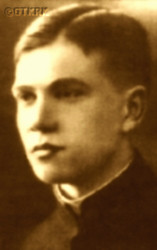
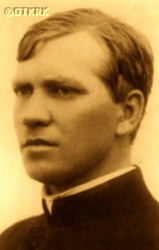
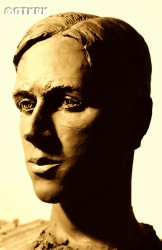
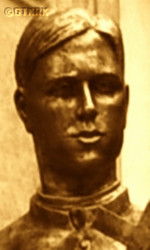
religious status
Servant of God
surname
NOWOSAD
forename(s)
Blase (pl. Błażej)
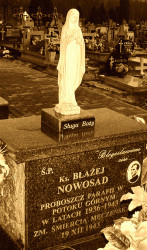
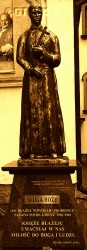
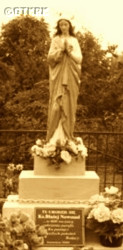
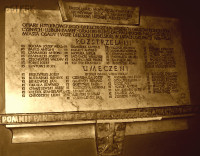
function
diocesan priest
creed
Latin (Roman Catholic) Church RCmore on
en.wikipedia.org
[access: 2014.09.21]
diocese / province
Lublin diocesemore on
pl.wikipedia.org
[access: 2013.05.19]
date and place
of death
19.12.1943

Potok Górnyform.: Potok Ordynacki
today: Potok Górny gm., Biłgoraj pov., Lublin voiv., Poland
more on
en.wikipedia.org
[access: 2021.08.20]
alt. dates and places
of death
13.12.1943
details of death
From 1936, led a parish in Potok Górny, in the then Biłgoraj county, Lublin Voivodeship, on the southern edge of a belt of forests c. 120 km long and 20 km wide, stretching southeast from the Vistula River to Lviv, which include, i.a. the Solska Forest and the Janowskie Forests. It was a large village, with population in 1939 of c. 2,300, of whom c. 1,500 were Roman Catholic Poles, c. 700 Orthodox Ukrainians, and c. 100 Jews.
After the German and Russian invasion of the Poland in 09.1939 and the start of World War II, the Germans entered Potok Górny on c. 15.09.1939. But soon, 27.09.1939, in accordance with the secret annex of the genocidal Molotov–Ribbentrop Pact of 21.08.1939, the Germans withdrew and let the Russians into the village. The next day, however, i.e. 28.09.1939, the same criminals in the second Molotov–Ribbentrop Treaty, „on the borders and friendship between Germany and Russia”, specified mutual obligations, and on c. 05‐06.10.1939, the Russians withdrew eastward, beyond the Bug River. The German occupation began.
Potok Górny found itself in the Germ. Kreishauptmannschaft Biłgoraj (Eng. Biłgoraj County) within the niem.
Distrikt Lublin (Eng. Lublin District), part of the German‐occupied and run quasi‐state called the Germ. Generalgouvernement (Eng. General Governorate), i.e. GG. The Germ. SS‐ und Polizeiführer (Eng. SS and Police Commander) in the Germ. Distrikt Lublin, and de facto deputy governor of this district, was one of the greatest criminals in human history, the Austrian, Odilo Lotario Globočnik, whom one historian described as „the most vile individual in the most vile organization that has ever existed”.
The Germans immediately introduced terror against the Polish population. One of its goals was an attempt to break the influence of the Roman Catholic Church and Polish culture. This was expressed, e.g. in a clear favoritism towards the Ukrainian population. The policy of supporting the Ukrainian element was perhaps most visible in the social policy of GG. Germany allowed the activity of social and charitable organizations, but only the Ukrainian Central Committee UCC was partially financed from the GG budget. Additionally, it could use the funds of Ukrainian cooperatives. The Polish Central Welfare Council RGO and the Jewish Social Self‐Help JSS had to rely exclusively on voluntary contributions from donors. As a result, Polish and Jewish organizations could only conduct charitable activities: supporting food supplies, aid for refugees, etc. On the other hand Ukrainians, using the GG funds, built Ukrainian hospitals, orphanages, nurseries, schools. In some regions of the Germ. Distrikt Lublin, the Germans de facto restored the policy Ukrainization, having its origins in 1918, at the end of World War I, when on 09.02.1918, the occupying Central Powers, i.e. the German Empire and the Austro–Hungarian Monarchy concluded the Treaty of Brest‐on‐the‐Bug with the fledgling, seasonal Ukrainian state, with its capital in Kyiv, in which, by the by of caducus, i.e. „with disregard for the rights”, bypassing the Poles, the Chełm region was awarded to Ukraine. In many places, schools were taken from Polish hands and handed over to Ukrainians. Some Catholic priests were thrown out of their parishes and churches were converted into Orthodox ones. This led to an intensification of the Polish‐Ukrainian conflict. It could not have been otherwise, since on the entrance door to the waiting room of the main railway station in the capital of the GG, Kraków, there was an inscription in Germ. „Nur für Deutsche aus dem Reich, Volksdeutsche und Ukrainer” (Eng. „Only for Germans from the Reich, Volksdeutsche and Ukrainians”).
In Potok Górny, the seat of the commune bearing the same name as this village, policy of repression against Poles and the Roman Catholic Church was expressed, i.a. by appointment of Ukrainians, John Jaceczko and Dimitr Byki (or Banno), as mayor and commune secretary.
Already form 1939, provided assistance to the families of servicemen who had not returned home after the Polish defeat in 09.1939, perhaps perishing or falling into Russian or German hands as prisoners of war.
In 1939 and 1940, thousands of Poles appeared in the Lublin region, thrown from trains — sometimes in the middle of nowhere — traveling from the Polish western and northern voivodeships which were directly incorporated into the German Reich as its new provinces or parts of existing provinces. In particular, from 04.12.1939 to 1941, the Germans deported from the so‐called Germ. Reichsgau Wartheland (Eng. Reich district Wartheland), a new province created in German‐occupied Greater Poland, over 280,000 Poles. In this, by the end of 12.1939, during the exceptionally cold winter of 1939/1940, deported a total of 87,883 people in about 80 transports. Entrepreneurs, landowners, and townspeople, along with their entire families, whose property and apartments were robbed were targeted specifically. In their place, Germans from the Baltic countries, Volyn, Galicia, Podlasie, and later even from Bessarabia — occupied, in accordance with the aforementioned Ribbentrop–Molotov friendship pacts, by the Russians — where brought in. The displacements and deportations were part of the German plan, the Germ. Generalsiedlungsplan (Eng. General Resettlement Plan), i.e. Germanization of the occupied Polish lands.
Some of these unfortunates — perhaps thrown out of a train on the Łódź–Lviv line and led across a bridge over the San River — ended up in his parish. Helped them as well.
Some of the deportees were Jews. I.a. c. 250 of them found shelter in Tarnogród, located c. 13 km east of Potok Górny. There they were taken care of by the Jewish self‐help JSS organization, operating under the auspices of the Germ. Judenrat (Eng. Jewish Council), established by the Germans in 1939 — to the partial satisfaction of the Jews, who believed that in this way they were gaining self‐government, independent of the surrounding Polish majority. In the Germ. Kreis Biłgoraj, the Germans did not organize ghettos, but issued regulations implemented by the Germ. Judenrat, which imposed restrictions on Jews with increasing brutality and effectiveness. This policy took on a special dimension after the German attack on 22.06.1941 on their erstwhile ally, the Russians, and the start of the German–Russian war; after 25.10.1941, when the decree of the Germ. Generalgouverneur (Eng. General Governor) of the GG, Hans Frank, i.e. the GG „residence restriction act”, according to which „Jews who leave their designated district without authorization are subject to the death penalty. The same punishment applies to persons who knowingly provide such Jews with a hiding place”, and „Instigators and accomplices are subject to the same punishment as the perpetrator, and an attempt is punishable as a completed act. In less serious cases, a prison sentence may be imposed”.
Sources indicate that despite this, provided assistance and shelter to Jews whenever possible.
At the turn of 1941/1942, the Germans began implementing the genocidal plan of the Germ. «Endlösung der Judenfrage» (Eng. Final Solution of the Jewish Question), i.e. physical extermination of the Jewish population. On 09.08.1942 from Tarnogród the Germans deported c. 1,500 Jews — on peasant wagons — to the county town of Biłgoraj, and from there, together with c. 1,000 local Jews, to the Zwierzyniec railway station on the Lublin‐Lviv line, where they were all loaded onto freight cars. From there, they were taken to the Germ. Vernichtungslager (Eng. Extermination Camp) VL Belzec, founded by the above‐mentioned genocide perpetrator, Odilo Globočnik, in the village of Bełżec, on the border of the Germ. Distrikt Lublin and the Germ. Distrikt Galizien (Eng. District of Galicia). The guard and execution functions in VL Belzec were done by the Germ. SS‐Wachmannschaften (Eng. SS Guard Teams), trained in Germ. SS‐Ausbildungslager (Eng. SS Training Camp) Trawniki, mainly Ukrainians. In VL Belzec the Jews were murdered. Then c. 1,000 Jews from the surrounding villages, including Potok Górny, were evicted to Tarnogród. Next on 02.11.1942 they were all deported, by the same route, to VL Belzec — though c. 300 of them were murdered by the Germans during the deportation to Biłgoraj. The German county leader could report that his Germ. Kreis Biłgoraj was Germ. „Judenfrei” (Eng. „free of Jews”).
Some Jews, however, managed to hide. Sources indicate that provided aid to several of them, sought and hunted by the Germans and Ukrainians, despite the threat of death under the aforementioned Hans Frank decree. At that time, was already collaborating with the underground, resistance Home Army AK (part of the Polish Clandestine State), ministering as its chaplain. Collaborated also with another Polish underground organization, the Peasant Battalions BCh.
When parishioners were threatened with arrest for failing to deliver a contingent to the Germans, volunteered as a hostage and was detained in prison. The Germans announced that would not be released until the villagers fulfilled their plundering quota. The parishioners handed over all their grain supplies.
Germ. SS‐ and Police Officer Odilo Globočnik did not remain idle. Roundups were organized for Jews, that were hiding, mostly in forests — especially in the Germ. Kreis Biłgoraj area. Repression also spread to Polish villages that supported the growing Polish resistance movement, including partisans, whose units helped the hiding Jews. On 13.10.1942, German and Ukrainian criminals collaborating with them entered his village of Potok Górny. The inhabitants were ordered to gather in front of the commune building. The men were lined up in two rows. One of the German officers accused the villagers of robbing the commune office and of hiding partisans, and declared that to stop such practices, 10 selected men would be shot. The victims were randomly drawn from the rows of men, after which the Germans and Ukrainians carried out a public execution.
In 12.1942, Globočnik shifted his main focus to the Germ. Aktion Zamość (Eng. Operation Zamość), a series of displacement and pacification operations of Polish villages in the Zamość region, as part of the Germ. Generalplan Ost (Eng. General Plan Eastern), a German settlement and Germanization program — another variation of the aforementioned Germ. Generalsiedlungsplan — in order to gain Germ. Lebensraum (Eng. living space) for the Germ. Herrenvolk (Eng. master race). The intention was to displace hundreds of thousands of Poles and bring in German colonists in their place. Altogether, the Germans managed, with the help of Ukrainian collaborators, to displace 100,000‐110,000 Poles, including 30,000 children, some of whom — considered the most racially „pure” — were taken from their parents and given to families in the depths of Germany.
But not everything went according to the Germans" plan. The first stage of the Germ. Aktion Zamość began on 28.11.1942, and encompassed 116 Polish villages, of which c. 21% of the displaced were designated for extermination and sent to concentration camps. The stage ended in 03.1943. However, it was met with an armed reaction from Polish partisan forces, grouped mainly in the Solska Forest — units of the AK, the BCh, and the communist People's Guard GL. On 12.12.1942, the Zamość Uprising began, in which the Polish partisans responded to the displacement by attacking villages of German and Ukrainian colonists.
Thus only in June 1943, when the Belzec extermination camp ceased its „operations”, the Germans were able to began the second phase of the Germ. Aktion Zamość, codenamed Germ. Aktion Werwolf (Eng. Operation Werewolf). It was intended to lead not only to the displacement of all Poles, but also to the German colonization of the „cleansed area” and the creation of a protection zone, a barrier of villages in which a German‐friendly Ukrainian community was to be settled. This part of the operation was carried out under the German codename Germ. „Ukraineraktion” (Eng. Ukrainian Operation), and included the Germ. Kreis Biłgoraj.
A little earlier, in 02.1943, in the Germ. Generalbezirk Wolhynien–Podolien (Eng. General District of Volyn‐Podolya), bordering with the Germ. Distrikt Lublin, belonging to the occupied Germ. Reichskommissariat Ukraine (Eng. Reich Commissariat Ukraine), Roman Shukhevych, nom de guerre „Taras Chuprynka”, the chief commander of the Ukrainian, genocidal OUN/UPA organisation, who in 1941 was a member of the Ukrainian Germ. Sondergruppe Nachtigall (Eng. Special Group Nightingale) — a unit of the Germ. Wehrmacht (Eng. Armed Forces) that took part in the German attack on Russians in 1941, accused of participating in the Jewish pogrom in Lviv in 1941 — and later a member of the Germ. Schutzmannschaftsbataillon 201 (Eng. 201st Protection team Battalion) — responsible for the murder of Jews and civilians in the territory of Belarus — issued an order: „The extermination operation should be carried out according to the following principles: Polish villages are to be burned, and their populations massacred. Attacks on towns will take place in broad daylight, not at night. In mixed villages, the Polish population alone should be liquidated, and farmsteads should be burned only if they are 15 meters away and when there is no risk of the fire spreading to neighboring Ukrainian buildings. The Ukrainian population will receive instructions as to where to gather during the attack […] For every Ukrainian murdered, whether by Poles or Germans, 100 (one hundred) Poles will be executed”.
It was the de facto signal for the commencement of the «Genocidium Atrox» — i.e. the genocide perpetrated by Ukrainians, known as „Volyn genocide”.
Immediately afterwards, in 03.1943, the UPA issued an appeal addressed to members of the collaborative German Ukrainische Hilfspolizei (Eng. Ukrainian Auxiliary Police), in some regions also referred to as the Germ. Schutzmannschaft (Eng. Protection Battalions), i.e. Schuma — to desert and join the UPA. Perhaps as many as 10,000 Ukrainians did so.
Volyn was drenched in Polish blood. Tens of thousands of Poles were murdered by the Ukrainians — with German passivity — in an extremely barbaric manner. Hundreds of villages were burned.
When the «Genocidium Atrox» was reaching its apogee — on 11.07.1943, on „Bloody Sunday”, OUN/UPA génocidaires attacked c. 99 Polish villages — the Germ. Aktion Werwolf was beginning. The two Ukrainians mentioned above, John Jaceczko and Dimitri Byk, respectively the mayor and secretary of the Potok Wielki commune, distinguished themselves in the latter with special zeal. I.a. they were supposed to prepare lists of people to be deported as part of the Germ. Aktion Werwolf. They were also supposed to maintain contacts with Ukrainian genocide perpetrators from the OUN/UPA. Then — when information about the genocide in Volyn began to reach the Germ. Distrikt Lublin, often brought by traumatized Polish refugees who had often lost entire families at the hands of Ukrainian barbarians — a BCh unit from Lipiny Górne, c. 8 km away, decided to liquidate them. Both Ukrainians, as well as Catharine Byk and Nicholas Jaceczko, were shot on 17.12.1943.
Two days later, the Germans and Ukrainians carried out a retaliatory operation. At 6:00 a.m., they surrounded three neighboring villages: Potok Górny, Dąbrówka, and Zagródki, between which his parish church and rectory were located. The operation was prob. carried out by a unit of the 25th «SS» Police Regiment — i.e. Germ. Die Schutzstaffel der NSDAP (Eng. NSDAP Protection Unit), a paramilitary formation subordinate to the ruling National Socialist German Workers' Party NSDAP in Germany — from Lublin, reinforced with agents of the German gendarmerie, Ukrainians from the Germ. Ukrainische Hilfspolizei, and several civilian Ukrainians from nearby settlements. The main role was played by a Ukrainian, Volodymyr Darmochval, although he was not the commander of the unit — these roles were reserved for the Germans — but de facto led and pacification. The unit, moreover, went down in local history as Pl. „darmochwalcy” (Eng. „free‐self‐flatterer”).
Witnesses described his last moments: „On December 19, 1943, a unit […] in German service, commanded by Volodymyr Darmochwał, and Ukrainian police under the command of the district commander Ivan Yurkiv, as well as gendarmes from the Tarnogród station pacified the villages of Potok Górny, Dąbrówka, and Zagródki […] When the Ukrainians arrived at the rectory, the priest was reciting the breviary. They fired a shot at the kitchen door and then arrested the priest on charges of hiding bandits.
[…] The SS‐men demanded that the priest hand over the hiding partisans and Jews, and also show them where the weapons were hidden. Father Nowosad did not hand anyone over.
[…] The bandits bunched the priest with the other arrested people, whom they lined up. The priest then took out the cross he had with him, kissed it, and gave it to the others to kiss.
After a while, the Ukrainians called the priest out of the line, saying, "Pastor with us!"”.
Another recalled: „While sitting at the church organs, I heard the church door open and through the cracks in the church organs I saw four Ukrainians with guns rushing Father Nowosad to the church attic. They were walking quickly. After a while, I heard shots in the church attic”.
Still another added: „They murdered the priest, beating him on the head with a rifle, tearing off his fingernails, pulling out his veins with pliers, and tearing off part of his back. His entire body was punctured with a sharp instrument, and finally, at very close range, they shot him in the back of the head, shattering it. The priest was squealing and screaming because of so much pain”.
On that day, German and Ukrainian génocidaires were to murder 19 other village residents in the church and desecrated the temple. According to other sources, the total number of victims of the pacification was higher, 21, or even 59.
Volodymyr Darmokhval survived the war and escaped to the United States. In New York, the restaurant „Veselka” (Ukr. веселка, i.e. Eng. rainbow) still exists. The website reads: „Veselka […]was founded by Volodymyr and Olha Darmochwal in 1954.
Volodymyr and his wife were Ukrainian refugees in the late 1940s and found a home in the Little Ukraine neighborhood of the East Village of Manhattan […] Beyond its culinary acclaim, Veselka remains deeply connected to the local Ukrainian community, with Ukrainian staff and ongoing support for organizations linked with humanitarian efforts in Ukrainian”.
Lat. „O Tempora! O mores!”
cause of death
mass murder
perpetrators
Ukrainians
sites and events
«Genocidium Atrox»Click to display the description, Help to the JewsClick to display the description, GeneralgouvernementClick to display the description, Ribbentrop‐MolotovClick to display the description, Pius XI's encyclicalsClick to display the description
date and place
of birth
03.02.1903

Siemnicetoday: Rachanie gm., Tomaszów Lubelski pov., Lublin voiv., Poland
more on
en.wikipedia.org
[access: 2021.12.18]
parents
NOWOSAD Charles
🞲 ?, ? — 🕆 ?, ?

SZOPIŃSKA Francesca
🞲 ?, ? — 🕆 ?, ?
presbyter (holy orders)
ordination
13.09.1925

positions held
1936 – 1943
parish priest — Potok Górnyform.: Potok Ordynacki
today: Potok Górny gm., Biłgoraj pov., Lublin voiv., Poland
more on
en.wikipedia.org
[access: 2021.08.20] ⋄ St John the Baptist RC parish ⋄ Biłgorajtoday: Biłgoraj urban gm., Biłgoraj pov., Lublin voiv., Poland
more on
en.wikipedia.org
[access: 2020.12.03] RC deanery
1929 – 1936
administrator — Górecko Kościelnetoday: Józefów gm., Biłgoraj pov., Lublin voiv., Poland
more on
en.wikipedia.org
[access: 2021.09.29] ⋄ St Stanislav the Bishop and Martyr RC parish ⋄ Tarnogródtoday: Tarnogród gm., Biłgoraj pov., Lublin voiv., Poland
more on
en.wikipedia.org
[access: 2020.11.27] RC deanery — organizer of the parish (1936) and builder of the church (1932‐1934) in Aleksandrów
1929
vicar — Górecko Kościelnetoday: Józefów gm., Biłgoraj pov., Lublin voiv., Poland
more on
en.wikipedia.org
[access: 2021.09.29] ⋄ St Stanislav the Bishop and Martyr RC parish ⋄ Tarnogródtoday: Tarnogród gm., Biłgoraj pov., Lublin voiv., Poland
more on
en.wikipedia.org
[access: 2020.11.27] RC deanery
1925 – 1929
vicar — Gorajtoday: Goraj gm., Biłgoraj pov., Lublin voiv., Poland
more on
en.wikipedia.org
[access: 2021.08.20] ⋄ St Bartholomew the Apostle RC parish ⋄ Szczebrzeszyntoday: Szczebrzeszyn gm., Zamość pov., Lublin voiv., Poland
more on
en.wikipedia.org
[access: 2021.08.20] RC deanery
1927
administrator — Nielisztoday: Nielisz gm., Zamość pov., Lublin voiv., Poland
more on
en.wikipedia.org
[access: 2021.09.29] ⋄ St Adalbert the Bishop and Martyr RC parish ⋄ Szczebrzeszyntoday: Szczebrzeszyn gm., Zamość pov., Lublin voiv., Poland
more on
en.wikipedia.org
[access: 2021.08.20] RC deanery — acting („ad interim”)
1920 – 1925
student — Lublintoday: Lublin city pov., Lublin voiv., Poland
more on
en.wikipedia.org
[access: 2021.08.20] ⋄ philosophy and theology, Theological Seminary
others related
in death
DOBRZAŃSKI–NICEWICZClick to display biography Nicholas
sites and events
descriptions
«Genocidium Atrox»: In 1939‐1947, especially in 1943‐1944, independent Ukrainian units, mainly belonging to genocidal Ukrainian organizations OUN (political arm) and UPA (military arm), supported by local Ukrainian population, murdered — often in extremely brutal way — in Volyn and surrounding regions of pre‐war Poland, from 130,000 to 180,000 Poles, all civilians: men, women, children, old and young. Polish‐Ukrainian conflict that openly emerged during and after World War I (in particular resulting in Polish‐Ukrainian war of 1918‐1919), that survived and even deepened later when western Ukraine became a part Poland, exploded again after the outbreak of the World War II in 09.1939. During Russian occupation of 1939‐1941, when hundreds of thousands of Poles were deported into central Russia, when tens of thousands were murdered (during so‐called Katyń massacres, among others), this open conflict had a limited character, helped by the fact that at that time Ukrainians, Ukrainian nationalists in particular, were also persecuted by the Russians. The worst came after German‐Russian war started on 22.06.1941 and German occupation resulted. Initially Ukrainians supported Germans (Ukrainian police was initiated, Ukrainians co—participated in extermination of the Jews and were joining army units fighting alongside Germans). Later when German ambivalent position towards Ukraine became apparent Ukrainians started acting independently. And in 1943 one of the units of aforementioned Ukrainian OUN/UPA organization, in Volyn, started and perpetrated a genocide of Polish population of this region. In mere few weeks OUN/UPA murdered, with Germans passively watching on the sidelines, more than 40,000 Poles. This strategy was consequently approved and adopted by all OUN/UPA organisations and similar genocides took place in Eastern Lesser Poland (part of Ukraine) where more than 20,000 Poles were slaughtered, meeting however with growing resistance from Polish population. Further west, in Chełm, Rzeszów, etc. regions this genocide turned into an extremely bloody conflict. In general genocide, perpetrated by Ukrainian nationalists, partly collaborating with German occupants, on vulnerable Polish population took part in hundreds of villages and small towns, where virtually all Polish inhabitants were wiped out. More than 200 priests, religious and nuns perished in this holocaust — known as «Genocidium Atrox» (Eng. „savage genocide”) The nature and purpose of genocide is perhaps best reflected in the song sung by the murderers: „We will slaughter the Poles, we will cut down the Jews, we must conquer the great Ukraine” (ukr. „Поляків виріжем, Євреїв видусим, велику Україну здобути мусим”). This holocaust and conflict ended up in total elimination of Polish population and Polish culture from Ukraine, in enforced deportations in 1944‐1945 of remaining Poles from Ukraine and some Ukrainians into Ukraine proper, and finally in deportation of Ukrainians from East‐South to the Western parts of Polish republic prl by Commie‐Nazi Russian controlled Polish security forces („Vistula Action”). (more on: www.swzygmunt.knc.plClick to attempt to display webpage
[access: 2021.06.20])
Help to the Jews: During World War II on the Polish occupied territories Germans forbid to give any support to the Jews under penalty of death. E.g., on 15.10.1941, the Germ. Generalgouverneur (Eng. General Governor) of the Germ. Generalgouvernement (Eng. General Governorate), i.e. GG, Hans Frank, issued the „3rd Ordinance on Restrictions on Residence in the General Governorate”, in which §1 stated that: „1) Jews who leave their designated district without authorization are subject to the death penalty. The same penalty applies to persons who knowingly provide such Jews with a hiding place”; and „2) Instigators and accomplices are subject to the same punishment as the perpetrator; an attempted act will be punished as a completed act. In less serious cases, severe imprisonment or prison may be imposed”. This ordinance was further elaborated by the district leaders of GG. E.g., on 10.11.1941, the Germ. Gouverneur (Eng. Governor) of the Germ. Distrikt Warschau (Eng. Warsaw District) in GG, Ludwig Fischer, issued a proclamation stating that: „A Jew who in the future unauthorizedly leaves the residential district assigned to him will be punished with death”. And added: „The same punishment applies to anyone who knowingly provides shelter to such Jews or helps them in any other way (e.g., by providing accommodation, board, by taking them on vehicles of any kind, etc.)”. In practice, this meant that responsibility for hiding Jews rested not only with the owners of the premises, but also with all the people being there, generally the family of the person hiding them. When at the turn of 1941/1942 the Germans began to implement the genocidal plan Germ. Endlösung der Judenfrage (Eng. Final Solution of the Jewish Question), when the deportation of Jews from the Warsaw ghetto to the Germ. Vernichtungslager (Eng. extermination camp) VL Treblinka was underway, the Polish writer Sophie Kossak–Szczucka on 11.08.1942 issued an appeal „Protest!”, published in the underground press in a circulation of 5,000 copies. She wrote: „The world looks at this crime, more terrible than anything history has ever seen, and — it remains silent […] This silence cannot be tolerated any longer. Whatever its motives — it is despicable. We cannot remain passive in the face of crime. Whoever remains silent in the face of murder becomes an accomplice to the murderer. Whoever does not condemn, consents. Therefore, we, Catholics — Poles, are speaking out. Our feelings towards Jews have not changed. We do not cease to consider them political, economic, and ideological enemies of Poland. Moreover, we realize that they hate us more than they hate Germans […] Awareness of these feelings, however, does not release us from the obligation to condemn the crime […] Whoever does not understand this, whoever would dare to link Poland's proud, free future with the despicable joy of their neighbor's misfortune — is therefore neither a Catholic nor a Pole!” The „Protest” was signed by the „Front for the Rebirth of Poland”, i.e. FOP, a clandestine Catholic organization that was a continuation of Catholic Action during the German occupation. On 27.09.1942, the Polish Clandestine State, the largest resistance organization in German–occupied Europe, at the initiative of Sophie Kossak–Szczucka and Wanda Krahelska–Filipowicz, a member of the Polish Socialist Party, established the Provisional Committee to Aid Jews. On 04.12.1942, the Council to Aid Jews at the Polish Government Delegature in occupied Poland, codenamed „Conrad Żegota”, was established in its place. Hundreds of Polish priests and religious extended help to the Jews, under threat of life. Many of them were caught and murdered.
Generalgouvernement: After the Polish defeat in the 09.1939 campaign, which was the result of the Ribbentrop‐Molotov Pact and constituted the first stage of World War II, and the beginning of German occupation in part of Poland (in the other, eastern part of Poland, the Russian occupation began), the Germans divided the occupied Polish territory into five main regions. In two of them new German provinces were created, two other were incorporated into other provinces. However, the fifth part was treated separately, and in a political sense it was supposed to recreate the German idea from 1915 (during World War I, after the defeat of the Russians in the Battle of Gorlice in 05.1915) of creating a Polish enclave within Germany. Illegal in the sense of international law, i.e. Hague Convention, and public law, managed by the Germans according to separate laws — especially established for the Polish Germ. Untermenschen (Eng. subhumans) — till the Russian offensive in 1945 it constituted part of the Germ. Großdeutschland (Eng. Greater Germany). Till 31.07.1940 formally called Germ. Generalgouvernement für die besetzten polnischen Gebiete (Eng. General Government for the occupied Polish lands) — later simply Germ. Generalgouvernement (Eng. General Governorate), as in the years 1915‐1918. From 07.1941, i.e. after the German attack on 22.06.1941 against the erstwhile ally, the Russians, it also included the Galicia district, i.e. the Polish pre‐war south‐eastern voivodeships. A special criminal law was enacted and applied to Poles and Jews, allowing for the arbitrary administration of the death penalty regardless of the age of the „perpetrator”, and sanctioning the use of collective responsibility. After the end of the military conflict of the World War UU, the government of the Germ. Generalgouvernement was recognized as a criminal organization, and its leader, governor Hans Frank, guilty of war crimes and crimes against humanity and executed. (more on: en.wikipedia.orgClick to attempt to display webpage
[access: 2024.12.13])
Ribbentrop‐Molotov: Genocidal Russian‐German alliance pact between Russian leader Joseph Stalin and German leader Adolf Hitler signed on 23.08.1939 in Moscow by respective foreign ministers, Mr. Vyacheslav Molotov for Russia and Joachim von Ribbentrop for Germany. The pact sanctioned and was the direct cause of joint Russian and German invasion of Poland and the outbreak of the World War II in 09.1939. In a political sense, the pact was an attempt to restore the status quo ante before 1914, with one exception, namely the „commercial” exchange of the so‐called „Kingdom of Poland”, which in 1914 was part of the Russian Empire, fore Eastern Galicia (today's western Ukraine), in 1914 belonging to the Austro‐Hungarian Empire. Galicia, including Lviv, was to be taken over by the Russians, the „Kingdom of Poland” — under the name of the General Governorate — Germany. The resultant „war was one of the greatest calamities and dramas of humanity in history, for two atheistic and anti‐Christian ideologies — national and international socialism — rejected God and His fifth Decalogue commandment: Thou shall not kill!” (Abp Stanislav Gądecki, 01.09.2019). The decisions taken — backed up by the betrayal of the formal allies of Poland, France and Germany, which on 12.09.1939, at a joint conference in Abbeville, decided not to provide aid to attacked Poland and not to take military action against Germany (a clear breach of treaty obligations with Poland) — were on 28.09.1939 slightly altered and made more precise when a treaty on „German‐Russian boundaries and friendship” was agreed by the same murderous signatories. One of its findings was establishment of spheres of influence in Central and Eastern Europe and in consequence IV partition of Poland. In one of its secret annexes agreed, that: „the Signatories will not tolerate on its respective territories any Polish propaganda that affects the territory of the other Side. On their respective territories they will suppress all such propaganda and inform each other of the measures taken to accomplish it”. The agreements resulted in a series of meeting between two genocidal organization representing both sides — German Gestapo and Russian NKVD when coordination of efforts to exterminate Polish intelligentsia and Polish leading classes (in Germany called «Intelligenzaktion», in Russia took the form of Katyń massacres) where discussed. Resulted in deaths of hundreds of thousands of Polish intelligentsia, including thousands of priests presented here, and tens of millions of ordinary people,. The results of this Russian‐German pact lasted till 1989 and are still in evidence even today. (more on: en.wikipedia.orgClick to attempt to display webpage
[access: 2015.09.30])
Pius XI's encyclicals: Facing the creation of two totalitarian systems in Europe, which seemed to compete with each other, though there were more similarities than contradictions between them, Pope Pius XI issued in 03.1937 (within 5 days) two encyclicals. In the „Mit brennender Sorge” (Eng. „With Burning Concern”) published on 14.03.1938, condemned the national socialism prevailing in Germany. The Pope wrote: „Whoever, following the old Germanic‐pre‐Christian beliefs, puts various impersonal fate in the place of a personal God, denies the wisdom of God and Providence […], whoever exalts earthly values: race or nation, or state, or state system, representatives of state power or other fundamental values of human society, […] and makes them the highest standard of all values, including religious ones, and idolizes them, this one […] is far from true faith in God and from a worldview corresponding to such faith”. On 19.03.1937, published „Divini Redemptoris” (Eng. „Divine Redeemer”), in which criticized Russian communism, dialectical materialism and the class struggle theory. The Pope wrote: „Communism deprives man of freedom, and therefore the spiritual basis of all life norms. It deprives the human person of all his dignity and any moral support with which he could resist the onslaught of blind passions […] This is the new gospel that Bolshevik and godless communism preaches as a message of salvation and redemption of humanity”… Pius XI demanded that the established human law be subjected to the natural law of God , recommended the implementation of the ideal of a Christian state and society, and called on Catholics to resist. Two years later, National Socialist Germany and Communist Russia came together and started World War II. (more on: www.vatican.vaClick to attempt to display webpage
[access: 2023.05.28], www.vatican.vaClick to attempt to display webpage
[access: 2023.05.28])
sources
personal:
pl.wikipedia.orgClick to attempt to display webpage
[access: 2012.11.23], gimszyszkow.cba.plClick to attempt to display webpage
[access: 2014.08.14], www.hagiographycircle.comClick to attempt to display webpage
[access: 2012.11.23], www.niedziela.plClick to attempt to display webpage
[access: 2013.12.04]
bibliographical:
„Mysterium iniquitatis. Clergy and religious of the Latin rite murdered by Ukrainian nationalists in 1939‐1945”, Fr Józef Marecki, Institute of National Remembrance IPN, Kraków 2020
„Genocidium Atrox”, GTKRK, https://www.swzygmunt.knc.pl/GENOCIDEs/15 GENOCIDUM ATROX/vPOLISH/MAINs/GENATROXsearch01.htm
original images:
www.spwozuczyn.cba.plClick to attempt to display webpage
[access: 2017.11.07], gimszyszkow.cba.plClick to attempt to display webpage
[access: 2014.08.14], www.arspolonia.infoClick to attempt to display webpage
[access: 2017.11.07], commons.wikimedia.orgClick to attempt to display webpage
[access: 2017.11.07], plus.google.comClick to attempt to display webpage
[access: 2014.08.14], commons.wikimedia.orgClick to attempt to display webpage
[access: 2017.11.07], wozuczyn.pl.tlClick to attempt to display webpage
[access: 2017.11.07], www.miejscapamiecinarodowej.plClick to attempt to display webpage
[access: 2014.05.09]

LETTER to CUSTODIAN/ADMINISTRATOR
If you have an Email client on your communicator/computer — such as Mozilla Thunderbird, Windows Mail or Microsoft Outlook, described at WikipediaPatrz:
en.wikipedia.org, among others — try the link below, please:
LETTER to CUSTODIAN/ADMINISTRATORClick and try to call your own Email client
If however you do not run such a client or the above link is not active please send an email to the Custodian/Administrator using your account — in your customary email/correspondence engine — at the following address:

giving the following as the subject:
MARTYROLOGY: NOWOSAD Blase
To return to the biography press below:
 Click to return to biography