Roman Catholic
St Sigismund parish
05-507 Słomczyn
85 Wiślana Str.
Konstancin deanery
Warsaw archdiocese, Poland


full list:
displayClick to display full list

searchClick to search full list by categories
wyświetlKliknij by wyświetlić pełną listę po polsku

szukajKliknij by przeszukać listę wg kategorii po polsku

Martyrology of the clergy — Poland
XX century (1914 – 1989)
personal data
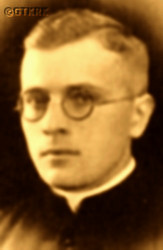
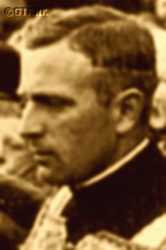
surname
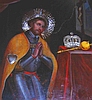
JACHUŁA
forename(s)
James (pl. Jakub)
function
diocesan priest
creed
Latin (Roman Catholic) Church RCmore on
en.wikipedia.org
[access: 2014.09.21]
diocese / province
Lublin diocesemore on
pl.wikipedia.org
[access: 2013.05.19]
date and place
of death
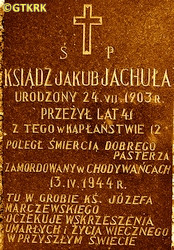
13.04.1944

Chodywańcetoday: Jarczów gm., Tomaszów Lubelski pov., Lublin voiv., Poland
more on
en.wikipedia.org
[access: 2021.12.18]
details of death
After the German and Russian invasion of the Poland in 09.1939 and the start of World War II, after the beginning of the German occupation, in 06.1942 agreed to become the parish priest located in one of the most terrible places on Earth. In the Germ. Distrikt Lublin (Eng. Lublin District) of the German occupation entity, the Germ. Generalgouvernement (Eng. General Governorate), i.e. GG, where the parish of Chodywańce was located, the commander of the German armed police forces, the SS‐ und Polizeiführer (Eng. SS and Police Commander), was an Austrian, genocide perpetrator, Odilo Globočnik. Under his general leadership, on c. 17.03.1942, in Bełżec, c. 14 km from his parish village, VL Belzec, the first extermination camp in the GG, began to operate. As part of the genocidal Germ. «Endlösung der Judenfrage» (Eng. Final Solution of the Jewish Question) plan, implemented under the Germ. «Aktion Reinhardt» (Eng. Operation Reinhardt) codename, the Germans murdered c. 450,000 Jews, mainly from the Germ. GG Distrikt Galizien (Eng. GG District Galicia), i.e. from Eastern Galicia. The guard and execution functions in VL Belzec were performed by the Germ. SS‐Wachmannschaften (Eng. SS Guard Teams), trained in the Germ. SS‐Ausbildungslager Trawniki (Eng. SS Training Camp Trawniki), mainly Ukrainians. And at the same time, the Germans began to implement the Germ. Generalplan Ost (Eng. General Plan Wschodni), i.e. the plan to provide Germ. Lebensraum (Eng. Living space) for the Germ. Herrenvolk (Eng. Master Race), i.e. deportation and Germanization. In the Germ. District Lublin, this took the form of the genocidal Germ. Aktion Zamość (Eng. Action Zamość). The choice of the Lublin region, or more precisely the Chełm region, was not accidental — it prob. constituted the implementation of a long‐standing German plan, which began with the Treaty of Brest‐Litovsk of 09.02.1918, at the end of World War I, when the Germans and Austrians — fully consciously, without any attempt at an consultations with the Poles — concluded an agreement with the Ukrainians, granting them the Polish Chełm region.
When the VL Belzec extermination camp ceased its „operations” in 06.1943, the Germans began the second phase of the Germ. Aktion Zamość, codenamed Germ. Aktion Werwolf (Eng. Action Werewolf). While the first stage of the Germ. Aktion Zamość was intended to lead to the expulsion of all Poles from the Zamość area and the bringing in of German colonists there, the Germ. Aktion Werwolf, although intended to lead to the expulsion of all Poles, aimed at the Ukrainian colonization of the „cleansed area” and the creation of a protection zone for the Zamość area — after all, the Ukrainians collaborated with the Germans.
And prob. then was detained by the Germans and transported to the DL Zwierzyniec transit camp, c. 25 km west of Zamość. There likely came into contact — among the displaced Poles — with Polish children whom the Germ. Herrenvolk intended to Germanize. C. 30,000 Polish children were genocidally taken from their parents, transported to Germany, and handed over to German families.
Did not stay in the camp long: was released under unknown circumstances. This is probably evidenced in a letter sent on 13.08.1943, from Chodywańce to his superiors: „Two‐thirds of the parish is under the management of the [German] Commissioner. For a month, not a single person has attended Sunday Mass. There are no Mass stipends. So I am useless here. I kindly ask you to release me so that I can go to my family”.
And yet he remained. Even though it was still not safe. Chiefly not due to the Germans, but to the Ukrainians. For in 02.1943 Roman Shukhevych, nom de guerre „Taras Chuprynka”, the main commander of the Ukrainian genocidal OUN/UPA, issued an order: „The extermination operation should be carried out according to the following principles: Polish villages are to be burned, and their populations massacred. Attacks on towns will take place in broad daylight, not at night. In mixed villages, the Polish population alone should be liquidated, and farmsteads should be burned only if they are 15 meters away and when there is no risk of the fire spreading to neighboring Ukrainian buildings. The Ukrainian population will receive instructions as to where to gather during the attack […] For every Ukrainian murdered, whether by Poles or Germans, 100 (one hundred) Poles will be executed”.
It was the de facto signal for the commencement of the «Genocidium Atrox» — i.e. the genocide perpetrated by Ukrainians, known as „Volyn genocide”.
Immediately thereafter, in 03.1943, the UPA issued an appeal to members of the Germ. Ukrainische Hilfspolizei (Eng. Ukrainian Auxiliary Police), collaborating with Germans, in some regions also referred to as the Germ. Schutzmannschaft (Eng. Protection Battalions), i.e. Schuma, which co‐participated in the German genocidal plan Germ. «Endlösung der Judenfrage», to desert and join the UPA. Perhaps as many as 10,000 Ukrainians did so.
The tactics of the genocidal Ukrainians were detailed in an order issued by Dmytro Klachkivsky, nom de guerre „Klym Savur”, from 06.1943. Anticipating Germany's defeat in the war with Russia, explained and ordered: „We should carry out a major operation to eliminate the Polish element. When the German troops withdraw, we should use this opportune moment to eliminate the entire male population aged 16 to 60 […] We cannot lose this fight, and we must weaken Polish forces at all costs. Forest villages and villages located near forest massifs should disappear from the face of the earth”.
The area around his village was subject to Military District WO‐3 „Turiv”, part of the OUN/UPA genocidal Operational Group „UPA‐North” (under the command of the aforementioned „Klym Savur”), commanded by Yuri Stelmashchuk, nom de guerre „Rudy”. This „democrat” reportedly protested — for less than two months — and then meekly began carrying out the genocide in the area under his control.
Survived the first attack on the rectory. At that time, prob. stopped living in the rectory — every night slept at different location at his parishioners" houses. However, eventually returned.
At the beginning of 04.1944, the front of Russian‐German war approached to c. 120 km from Zamość — among others, on 02.02.1944, the Russians captured Lutsk, the capital of pre‐war Polish in Volyn voivodeship. Then the OUN/UPA decided on another massive extermination action against Poles. This might be inferred from the order of the genocide killer Miroslav Onyshkevych, nom de guerre „Orest”, commanding the OUN/UPA district WO‐6 „Sian” neighboring WO‐3 „Turiv”, from 06.04.1944: „I order the immediate purging of my region of the Polish element […] The purging should be carried out in the sparsely populated areas by Poles. For this purpose, a militia group composed of our members should be established in the area, whose task would be to eliminate the above‐mentioned. Larger areas will be purged of this element by our military units even in broad daylight […] The purging of the area must be completed before our Easter, so that we can celebrate it without Poles […] Fight them hard and ruthlessly. Spare no one, even in the case of mixed marriages. Pull the Poles out of their homes, but do not eliminate the Ukrainians and children in these houses […] Take out your weapons. Death to the Poles” And then the second attack on his parish village took place. Was prepared for it, it seems, because apparently received a warning, to which supposedly replied: „How can I leave my sheep?”.
The attack was carried out — on the night of 12‐13.04.1944, i.e. from Holy Wednesday to Maundy Thursday, in both denominations: Roman Catholic and Greek Catholic — prob. by one of the three OUN/UPA sotnias, or perhaps all three together, i.e. the sotnia commanded by a certain Michael/Mykhailo Kravchuk, nom de guerre „Jastrub” (Eng. „Hawk”), the sotnia commanded by Gregory/Hryhoriy Tkachuk, nom de guerre „Kruk” (Eng. „Raven”), and the sotnia commanded by Bazyli/Vasyl Myhal, nom de guerre „Halayda” (Eng. „Haystack”). Sources state: „Around 3 a.m., shots were fired, screams were heard, and flames burst forth. Banderites were approaching from several directions, wanting to surround villages inhabited by Poles and catch those fleeing. Then Plebanka, with its 80 houses, and the Chodywańce Colony‐20 Polish families‐ceased to exist. Paradoxically, German soldiers stationed in nearby Jarczów came to the aid of the Poles. Their intervention forced the Ukrainians to withdraw and limited the scale of the massacre”.
Some people were kidnapped by the genocide. Was one such victim.
Some of the abductees" bodies were found later. His, too. The corpse bore signs of torture‐his tongue and other body parts had been cut out, was probably flayed, and finally, his throat was prob. slit. According to other sources, the unconscious man's stomach was finally sawn open and his intestines were pulled out. The witness described these events as follows: „On Saturday before Palm Sunday, a huge scream rang out in the village. Shots were heard, and tongues of fire appeared in several places. We ran to a nearby hill. Chodywańce seemed to be on fire. Strong and young people saved themselves by running away. The safest thing was to run towards Jarczów. Those who headed for the forest, towards the Chodywańce colony, fell into the hands of the Ukrainians. Among the captured was a priest from our parish, Jacob Jachuła […] They were led to the pit previously dug by the local Ukrainians and shot. The Ukrainians prepared a terrible death for our priest. First, they dragged him into the woods, bullying him on the way. Later, having fun, they proceeded to inflict martyrdom on the priest. They cut off his ears and hands piece by piece. Finally, they cut the fainted man with a saw and watched the guts emerging from the priest. He died in this severe suffering. Later his body was dug up by his family and taken away. A certain Rusyn woman, whom the Ukrainians took to their camp as a cook, indicated where was buried. From her story, I also learned how the Ukrainians had wished they could’ve made a similar show with locat teacher. This one escaped them. After the war, me and a few people from Chodywańce were called to the parish in Tomaszów Lubelski. There we discussed the martyrdom of the priest. We waited a long time that the priest might be canonized. He stayed with his sheep to the end and it was he who suffered the most cruel and martyr's death”.
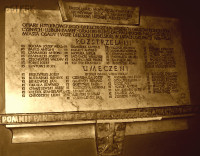
In total, in his parish Chodywańce, Ukrainians murdered 19 Poles, 2 Ukrainian men, and 1 Ukrainian woman. 14 farms were burned down. In Plebanka, c. 2.5 km away, 28 people were murdered, including 7 Ukrainians.
On 12.10.2007, the génocidaire Roman Shukhevych was posthumously awarded the title of Hero of Ukraine. In 12.2020, the Verkhovna Rada of Ukraine, in a resolution, recognized génocidaire Dmitry Klachkivsky as „the leader of the Ukrainian Insurgent Army in Volyn and a participant in the struggle for Ukraine's independence in the 20th century”. In several locations, monuments and commemorative plaques have been erected to these Lat. „hostis humani generis”, schools named after them.
Lat. „O Tempora! O mores!”
cause of death
mass murder
perpetrators
Ukrainians
sites and events
«Genocidium Atrox»Click to display the description, DL ZwierzyniecClick to display the description, «Aktion Zamość»Click to display the description, VL BelzecClick to display the description, GeneralgouvernementClick to display the description, Ribbentrop‐MolotovClick to display the description, Pius XI's encyclicalsClick to display the description
date and place
of birth
24.06.1903

Białowodatoday: Opole Lubelskie gm., Opole Lubelskie pov., Lublin voiv., Poland
more on
en.wikipedia.org
[access: 2021.12.18]
parents
JACHUŁA Adalbert
🞲 ?, ? — 🕆 ?, ?

STEC Catherine
🞲 ?, ? — 🕆 ?, ?
presbyter (holy orders)
ordination
19.06.1932

Lublintoday: Lublin city pov., Lublin voiv., Poland
more on
en.wikipedia.org
[access: 2021.08.20]
positions held
1942 – 1944
administrator — Chodywańcetoday: Jarczów gm., Tomaszów Lubelski pov., Lublin voiv., Poland
more on
en.wikipedia.org
[access: 2021.12.18] ⋄ Nativity of the Blessed Virgin Mary and St Peter and St Paul the Apostles RC parish ⋄ Tomaszów Lubelskitoday: Tomaszów Lubelski gm., Tomaszów Lubelski pov., Lublin voiv., Poland
more on
en.wikipedia.org
[access: 2021.08.20] RC deanery
1938 – 08.06.1942
parish priest — Klesztówtoday: Żmudź gm., Chełm pov., Lublin voiv., Poland
more on
en.wikipedia.org
[access: 2021.08.21] ⋄ Assumption of the Blessed Virgin Mary RC parish ⋄ Chełmtoday: Chełm city pov., Lublin voiv., Poland
more on
en.wikipedia.org
[access: 2021.08.20] RC deanery
1937 – c. 1938
vicar — Mokrelipietoday: Radecznica gm., Zamość pov., Lublin voiv., Poland
more on
en.wikipedia.org
[access: 2021.08.20] ⋄ Exaltation of the Holy Cross RC parish ⋄ Szczebrzeszyntoday: Szczebrzeszyn gm., Zamość pov., Lublin voiv., Poland
more on
en.wikipedia.org
[access: 2021.08.20] RC deanery
22.06.1934 – 1937
vicar — Michówtoday: Michów gm., Lubartów pov., Lublin voiv., Poland
more on
en.wikipedia.org
[access: 2021.08.21] ⋄ Assumption of the Blessed Virgin Mary RC parish ⋄ Lubartówtoday: Lubartów gm., Lubartów pov., Lublin voiv., Poland
more on
en.wikipedia.org
[access: 2021.08.20] RC deanery
22.09.1932 – 1934
vicar — Czemiernikitoday: Czemierniki gm., Radzyń Podlaski pov., Lublin voiv., Poland
more on
en.wikipedia.org
[access: 2021.08.21] ⋄ St Stanislav the Bishop and Martyr RC parish ⋄ Lubartówtoday: Lubartów gm., Lubartów pov., Lublin voiv., Poland
more on
en.wikipedia.org
[access: 2021.08.20] RC deanery
1927 – 1932
student — Lublintoday: Lublin city pov., Lublin voiv., Poland
more on
en.wikipedia.org
[access: 2021.08.20] ⋄ philosophy and theology, Theological Seminary
1923 – 1927
pupil — Kraśniktoday: Kraśnik urban gm., Kraśnik pov., Lublin voiv., Poland
more on
en.wikipedia.org
[access: 2021.08.20] ⋄ Coeducational Gymnasium of the District Department of the Janów Regional Assembly — studies crowned in 1927 with the maturity diploma (i.e. matura)
sites and events
descriptions
«Genocidium Atrox»: In 1939‐1947, especially in 1943‐1944, independent Ukrainian units, mainly belonging to genocidal Ukrainian organizations OUN (political arm) and UPA (military arm), supported by local Ukrainian population, murdered — often in extremely brutal way — in Volyn and surrounding regions of pre‐war Poland, from 130,000 to 180,000 Poles, all civilians: men, women, children, old and young. Polish‐Ukrainian conflict that openly emerged during and after World War I (in particular resulting in Polish‐Ukrainian war of 1918‐1919), that survived and even deepened later when western Ukraine became a part Poland, exploded again after the outbreak of the World War II in 09.1939. During Russian occupation of 1939‐1941, when hundreds of thousands of Poles were deported into central Russia, when tens of thousands were murdered (during so‐called Katyń massacres, among others), this open conflict had a limited character, helped by the fact that at that time Ukrainians, Ukrainian nationalists in particular, were also persecuted by the Russians. The worst came after German‐Russian war started on 22.06.1941 and German occupation resulted. Initially Ukrainians supported Germans (Ukrainian police was initiated, Ukrainians co—participated in extermination of the Jews and were joining army units fighting alongside Germans). Later when German ambivalent position towards Ukraine became apparent Ukrainians started acting independently. And in 1943 one of the units of aforementioned Ukrainian OUN/UPA organization, in Volyn, started and perpetrated a genocide of Polish population of this region. In mere few weeks OUN/UPA murdered, with Germans passively watching on the sidelines, more than 40,000 Poles. This strategy was consequently approved and adopted by all OUN/UPA organisations and similar genocides took place in Eastern Lesser Poland (part of Ukraine) where more than 20,000 Poles were slaughtered, meeting however with growing resistance from Polish population. Further west, in Chełm, Rzeszów, etc. regions this genocide turned into an extremely bloody conflict. In general genocide, perpetrated by Ukrainian nationalists, partly collaborating with German occupants, on vulnerable Polish population took part in hundreds of villages and small towns, where virtually all Polish inhabitants were wiped out. More than 200 priests, religious and nuns perished in this holocaust — known as «Genocidium Atrox» (Eng. „savage genocide”) The nature and purpose of genocide is perhaps best reflected in the song sung by the murderers: „We will slaughter the Poles, we will cut down the Jews, we must conquer the great Ukraine” (ukr. „Поляків виріжем, Євреїв видусим, велику Україну здобути мусим”). This holocaust and conflict ended up in total elimination of Polish population and Polish culture from Ukraine, in enforced deportations in 1944‐1945 of remaining Poles from Ukraine and some Ukrainians into Ukraine proper, and finally in deportation of Ukrainians from East‐South to the Western parts of Polish republic prl by Commie‐Nazi Russian controlled Polish security forces („Vistula Action”). (more on: www.swzygmunt.knc.plClick to attempt to display webpage
[access: 2021.06.20])
DL Zwierzyniec: Germ. Durchgangslager Zwierzyniec (Eng. Transit Camp), set up by Germans in 1940. Initially held Poles selected for slave labour in Germany. From 1942 to 1943 Germ. Aussiedlerlager (Eng. Repatriation Camp) — Poles from Zamojszczyzna region were held captive there — as part of so‐called «Aktion Zamość» during which c. 100‐110 thousands of victims, including c. 30,000 children (part of the genocidal robbery of children targeted for Germanization) were evicted from their homes. On average camp had c. 15,000 prisoners. Altogether c. 24,000 Poles — men, women and children — were held there. In the camp selection was carried out into 5 categories of victims: „WE” — having nording „ratial features”, targetted for „Germanisation” — transported to a special camp in Łódź; „AA” — sent out for slave labour, mainly in Germany; „KI” — children up to 14 years on, targetted for Germanisation in Germany; „KL” — transported to German concentration camps, mainly KL Majdanek and KL Auschwitz (c. 21%); „RD”— above 60 years old, and others, targeted for work for German colonizers. (more on: en.wikipedia.orgClick to attempt to display webpage
[access: 2021.12.19])
«Aktion Zamość»: On 11.1942, the Germans began «Aktion Zamość» — a series of forced resettlement, an ethnic cleansing actions of the Polish population and pacification of Polish villages carried out in the Zamość region, in the territory of the Germ. Generalgouvernement (Eng. General Governorate) occupied by Germans, under the Germ. Generalplan Ost GPO (Eng. General Plan East), i.e. the plan of German settlement and Germanization of territories in Central and Eastern Europe. Until 08.1943, it covered a total of 100,000‐110,000 displaced Poles, including 30,000 children (some of them were taken from their parents and semt for a forced Germanization in German families) — most of them passed through the special Germ. UWZ Lager Zamość (Eng. resettlement camp in Zamość), where selection took place, e.g. group IV, children separated from parents. In place of the displaced, it was intended to settle 60,000 German colonists from Bessarabia, Ukraine, Bosnia, Serbia, Slovenia and Russia. In the first phase (28.11.1942‐03.1943) 116 villages were forcibly displaced — the displacements were carried out by Germ. Schutzpolizei units or the gendarmerie, with the help of the Ukrainian Auxiliary Police collaborating with Germany; in the second, as part of the so‐called Aktion Werwolf (06.1943‐08.1943) — 171 villages — the displacements were supervised by Wehrmacht and Waffen‐SS units, supported by the employees of UWZ Lager Zamość. As a result of the actions of the Polish resistance movement — during the so‐called Zamość Uprising, Polish partisans fought several large battles with the overwhelming German forces — 293 villages were displaced out of the 696 planned. In some villages Germans settled resettled Ukrainians — during the so‐called Ukraineraktion — under control of collaborating with Germans Ukrainian Support Committees among others. (more on: en.wikipedia.orgClick to attempt to display webpage
[access: 2021.08.20], journals.umcs.plClick to attempt to display webpage
[access: 2021.08.20])
VL Belzec: German Germ. Vernichtungslager (Eng. Extermination camp) VL — oficially known as SS‐Sonderkommando Belzec — operational from 03.1942 till 06.1943 n. Belzec village, c. 8 km to the south of Tomaszów Lubelski, founded as part of German „Reinhardt” program of extermination of Jewish population. Victims were mainly Polish Jews from ghettos and camps in German‐run General Governorate, mainly from Galicia, Cracow and Lublin districts; but also Austrian, Czech, German, Slovak and Hungarian Jews. The victims were murdered in stationary gas chambers with exhaust fumes. The number of exterminated is estimated to reach c. 450,000. The camp was run by c. 20. German and Austrian SS functionaries at any one time. They were supported by a company of watchmen (Germ. SS‐Wachmannschaften) — mainly former Russian POWs who switched sides, in general of Ukrainian nationality. (more on: en.wikipedia.orgClick to attempt to display webpage
[access: 2020.02.08])
Generalgouvernement: After the Polish defeat in the 09.1939 campaign, which was the result of the Ribbentrop‐Molotov Pact and constituted the first stage of World War II, and the beginning of German occupation in part of Poland (in the other, eastern part of Poland, the Russian occupation began), the Germans divided the occupied Polish territory into five main regions. In two of them new German provinces were created, two other were incorporated into other provinces. However, the fifth part was treated separately, and in a political sense it was supposed to recreate the German idea from 1915 (during World War I, after the defeat of the Russians in the Battle of Gorlice in 05.1915) of creating a Polish enclave within Germany. Illegal in the sense of international law, i.e. Hague Convention, and public law, managed by the Germans according to separate laws — especially established for the Polish Germ. Untermenschen (Eng. subhumans) — till the Russian offensive in 1945 it constituted part of the Germ. Großdeutschland (Eng. Greater Germany). Till 31.07.1940 formally called Germ. Generalgouvernement für die besetzten polnischen Gebiete (Eng. General Government for the occupied Polish lands) — later simply Germ. Generalgouvernement (Eng. General Governorate), as in the years 1915‐1918. From 07.1941, i.e. after the German attack on 22.06.1941 against the erstwhile ally, the Russians, it also included the Galicia district, i.e. the Polish pre‐war south‐eastern voivodeships. A special criminal law was enacted and applied to Poles and Jews, allowing for the arbitrary administration of the death penalty regardless of the age of the „perpetrator”, and sanctioning the use of collective responsibility. After the end of the military conflict of the World War UU, the government of the Germ. Generalgouvernement was recognized as a criminal organization, and its leader, governor Hans Frank, guilty of war crimes and crimes against humanity and executed. (more on: en.wikipedia.orgClick to attempt to display webpage
[access: 2024.12.13])
Ribbentrop‐Molotov: Genocidal Russian‐German alliance pact between Russian leader Joseph Stalin and German leader Adolf Hitler signed on 23.08.1939 in Moscow by respective foreign ministers, Mr. Vyacheslav Molotov for Russia and Joachim von Ribbentrop for Germany. The pact sanctioned and was the direct cause of joint Russian and German invasion of Poland and the outbreak of the World War II in 09.1939. In a political sense, the pact was an attempt to restore the status quo ante before 1914, with one exception, namely the „commercial” exchange of the so‐called „Kingdom of Poland”, which in 1914 was part of the Russian Empire, fore Eastern Galicia (today's western Ukraine), in 1914 belonging to the Austro‐Hungarian Empire. Galicia, including Lviv, was to be taken over by the Russians, the „Kingdom of Poland” — under the name of the General Governorate — Germany. The resultant „war was one of the greatest calamities and dramas of humanity in history, for two atheistic and anti‐Christian ideologies — national and international socialism — rejected God and His fifth Decalogue commandment: Thou shall not kill!” (Abp Stanislav Gądecki, 01.09.2019). The decisions taken — backed up by the betrayal of the formal allies of Poland, France and Germany, which on 12.09.1939, at a joint conference in Abbeville, decided not to provide aid to attacked Poland and not to take military action against Germany (a clear breach of treaty obligations with Poland) — were on 28.09.1939 slightly altered and made more precise when a treaty on „German‐Russian boundaries and friendship” was agreed by the same murderous signatories. One of its findings was establishment of spheres of influence in Central and Eastern Europe and in consequence IV partition of Poland. In one of its secret annexes agreed, that: „the Signatories will not tolerate on its respective territories any Polish propaganda that affects the territory of the other Side. On their respective territories they will suppress all such propaganda and inform each other of the measures taken to accomplish it”. The agreements resulted in a series of meeting between two genocidal organization representing both sides — German Gestapo and Russian NKVD when coordination of efforts to exterminate Polish intelligentsia and Polish leading classes (in Germany called «Intelligenzaktion», in Russia took the form of Katyń massacres) where discussed. Resulted in deaths of hundreds of thousands of Polish intelligentsia, including thousands of priests presented here, and tens of millions of ordinary people,. The results of this Russian‐German pact lasted till 1989 and are still in evidence even today. (more on: en.wikipedia.orgClick to attempt to display webpage
[access: 2015.09.30])
Pius XI's encyclicals: Facing the creation of two totalitarian systems in Europe, which seemed to compete with each other, though there were more similarities than contradictions between them, Pope Pius XI issued in 03.1937 (within 5 days) two encyclicals. In the „Mit brennender Sorge” (Eng. „With Burning Concern”) published on 14.03.1938, condemned the national socialism prevailing in Germany. The Pope wrote: „Whoever, following the old Germanic‐pre‐Christian beliefs, puts various impersonal fate in the place of a personal God, denies the wisdom of God and Providence […], whoever exalts earthly values: race or nation, or state, or state system, representatives of state power or other fundamental values of human society, […] and makes them the highest standard of all values, including religious ones, and idolizes them, this one […] is far from true faith in God and from a worldview corresponding to such faith”. On 19.03.1937, published „Divini Redemptoris” (Eng. „Divine Redeemer”), in which criticized Russian communism, dialectical materialism and the class struggle theory. The Pope wrote: „Communism deprives man of freedom, and therefore the spiritual basis of all life norms. It deprives the human person of all his dignity and any moral support with which he could resist the onslaught of blind passions […] This is the new gospel that Bolshevik and godless communism preaches as a message of salvation and redemption of humanity”… Pius XI demanded that the established human law be subjected to the natural law of God , recommended the implementation of the ideal of a Christian state and society, and called on Catholics to resist. Two years later, National Socialist Germany and Communist Russia came together and started World War II. (more on: www.vatican.vaClick to attempt to display webpage
[access: 2023.05.28], www.vatican.vaClick to attempt to display webpage
[access: 2023.05.28])
sources
personal:
ltg.plClick to attempt to display webpage
[access: 2012.12.28], www.niedziela.plClick to attempt to display webpage
[access: 2012.12.28], www.kresykedzierzynkozle.home.plClick to attempt to display webpage
[access: 2013.01.13], www.kchodorowski.republika.plClick to attempt to display webpage
[access: 2013.01.26], www.miesiecznik.znak.com.plClick to attempt to display webpage
[access: 2014.08.14]
bibliographical:
„Genocidium Atrox”, GTKRK, https://www.swzygmunt.knc.pl/GENOCIDEs/15 GENOCIDUM ATROX/vPOLISH/MAINs/GENATROXsearch01.htm
original images:
niedziela.plClick to attempt to display webpage
[access: 2017.11.07], niedziela.plClick to attempt to display webpage
[access: 2017.11.07], www.stowarzyszenieuozun.wroclaw.plClick to attempt to display webpage
[access: 2014.01.16], www.miejscapamiecinarodowej.plClick to attempt to display webpage
[access: 2014.05.09]
LETTER to CUSTODIAN/ADMINISTRATOR
If you have an Email client on your communicator/computer — such as Mozilla Thunderbird, Windows Mail or Microsoft Outlook, described at WikipediaPatrz:
en.wikipedia.org, among others — try the link below, please:
LETTER to CUSTODIAN/ADMINISTRATORClick and try to call your own Email client
If however you do not run such a client or the above link is not active please send an email to the Custodian/Administrator using your account — in your customary email/correspondence engine — at the following address:

giving the following as the subject:
MARTYROLOGY: JACHUŁA James
To return to the biography press below:
 Click to return to biography