Roman Catholic
St Sigismund parish
05-507 Słomczyn
85 Wiślana Str.
Konstancin deanery
Warsaw archdiocese, Poland




full list:
displayClick to display full list

searchClick to search full list by categories
wyświetlKliknij by wyświetlić pełną listę po polsku

szukajKliknij by przeszukać listę wg kategorii po polsku

Martyrology of the clergy — Poland
XX century (1914 – 1989)
personal data
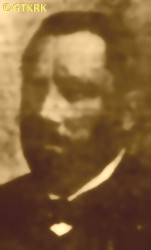
surname
POLIAŃSKI
surname
versions/aliases
ПОЛЯНСКИЙ
forename(s)
Olympus (pl. Olimpiusz)
function
eparchial priest
creed
Ukrainian Greek Catholic GCmore on
en.wikipedia.org
[access: 2013.05.19]
diocese / province
Przemyśl GC eparchymore on
pl.wikipedia.org
[access: 2013.05.19]
honorary titles
honorary canonmore on
en.wikipedia.org
[access: 2014.11.14]
(c. 1902)
nationality
Lemko
date and place
of death
13.03.1917

IL Talerhofinternment camp
today: Graz, Styria state, Austria
more on
en.wikipedia.org
[access: 2022.01.28]
details of death
After the outbreak of World War I in 07.1914, the authorities of the Austro‐Hungarian Monarchy in its province and crown land of the Germ. Königreich Galizien und Lodomerien (Eng. Kingdom of Galicia and Lodomeria) — i.e. in Galicia — and in the crown land of the Germ. Herzogtum Bukowina (Eng. Duchy of Bukovina) — i.e. in Bukovina — interned over 7,000 people, including c. 2,000 Lemkos, from about 151 villages — priests, teachers, officials, i.e. almost the entire Lemko intelligentsia and peasants. Due to the outbreak of armed conflict with the Russian Empire, citizens of the monarchy suspected of supporting the socio‐political current known as Russophilia, which proclaimed and professed community and ties with the Russian nation, competing with, among others, the Polish and, above all, Ukrainian national movements, were subjected to internment. The main determinant was attitudes toward Orthodoxy, particularly attempts to leave the Greek Catholic Church and convert to Orthodoxy.
All were deported to the Germ. „Internierungslager” (Eng. „internment camp”) IL Telerhof in southern Styria n. Graz (in the area today occupied by the airport). The first group of internees arrived at the camp on 14.09.1914, and on 09.11.1914, c. 5,700 people were held there.
Prisoners were left on the bare, wet ground — the first barracks were not built until the winter of 1915.
Vermin and disease were rampant — for example, on 11.12.1914, one prisoner recorded that 11 people were bitten to death by lice that day.
In late autumn, the Austrian authorities began building — with the help of Russian prisoners — dugouts, i.e. in the form of chicken coops, and above–ground barracks, in the form of long barns. This further exacerbated the sanitary situation — dirty, sick, and frail people were practically crammed into these barracks, an ideal environment for the spread of epidemics.
Furthermore, prisoners were practically starved. Terror reigned. Executions were carried out within the camp. In the first 18 months of the camp's operation, c. 3,000 people died.
Perished in the camp, in unknown circumstances.
When exhumations were carried out in 1936, 1,767 remains of victims were found. In total, c. 14,000—20,000 people passed through the camp. Among them were c. 350 priests of the Greek Catholic Church, of which c. 23 perished.
cause of death
extermination
perpetrators
Austrians
sites and events
IL ThalerhofClick to display the description
date and place
of birth
1857

presbyter (holy orders)
ordination
1881

positions held
1891 – 1914
parish priest — Jurowcetoday: Sanok gm., Sanok pov., Subcarpathia voiv., Poland
more on
en.wikipedia.org
[access: 2022.01.16] ⋄ St George the Martyr GC parish ⋄ Sanoktoday: Sanok urban gm., Sanok pov., Subcarpathia voiv., Poland
more on
en.wikipedia.org
[access: 2021.10.09] GC deanery — also: prefect of a primary school; from c. 1910 counselor of the Eparchial Consistory (Curia)
c. 1903 – c. 1910
city dean — Sanoktoday: Sanok urban gm., Sanok pov., Subcarpathia voiv., Poland
more on
en.wikipedia.org
[access: 2021.10.09] GC deanery
c. 1886 – 1891
prefect — Przemyśltoday: Przemyśl city pov., Subcarpathia voiv., Poland
more on
en.wikipedia.org
[access: 2021.04.01] ⋄ St John the Baptist GC cathedral parish ⋄ Przemyśltoday: Przemyśl city pov., Subcarpathia voiv., Poland
more on
en.wikipedia.org
[access: 2021.04.01] GC deanery — prefect of primary and boarding schools; also: 1888‐1891 secretar and till 1887 accountant of the Greek Catholic Seminary
c. 1885
vicar — Dobromyltoday: Dobromyl urban hrom., Sambir rai., Lviv obl., Ukraine
more on
en.wikipedia.org
[access: 2021.10.09] ⋄ Descent of the Holy Spirit (Pentecost) GC parish ⋄ Dobromyltoday: Dobromyl urban hrom., Sambir rai., Lviv obl., Ukraine
more on
en.wikipedia.org
[access: 2021.10.09] GC deanery
c. 1882 – 1884
administrator — Wisłok Górnytoday: part of Wisłok Wielki village, Komańcza gm., Sanok pov., Subcarpathia voiv., Poland
more on
en.wikipedia.org
[access: 2023.04.02] ⋄ Descent of the Holy Spirit (Pentecost) GC parish ⋄ Jasłotoday: Jasło urban gm., Jasło pov., Subcarpathia voiv., Poland
more on
en.wikipedia.org
[access: 2021.10.09] GC deanery
c. 1881
student — Przemyśltoday: Przemyśl city pov., Subcarpathia voiv., Poland
more on
en.wikipedia.org
[access: 2021.04.01] ⋄ philosophy and theology, Greek Catholic Theological Seminary
c. 1878 – c. 1880
student — Lvivtoday: Lviv urban hrom., Lviv rai., Lviv obl., Ukraine
more on
en.wikipedia.org
[access: 2022.01.16] ⋄ philosophy and theology, Greek Catholic Theological Seminary
widower
others related
in death
BEREZOWSKIClick to display biography Roman Yaroslav Thomas, CZERKAWSKIClick to display biography Joseph, DURKOTClick to display biography John Chrysostom, FILIPOWSKIClick to display biography Apollinaris, GMYTRYKClick to display biography Nicholas, HNATYSZAKClick to display biography Gabriel, KARPIAKClick to display biography Yaroslav, KOŁOMYJECClick to display biography Vladislav, KUNOWSKIClick to display biography Heronim, KURDYDYKClick to display biography Basil, KUŹMAKClick to display biography Michael, LITWINOWICZClick to display biography Cornelius, MAŁYNIAKClick to display biography Nicholas, POLIAŃSKIClick to display biography Alexander, POLIAŃSKIClick to display biography Nestor, POŁOSZYNOWICZClick to display biography Vladimir, SANDOWICZClick to display biography Maxim, SANDOWICZClick to display biography Peter, SAWICKIClick to display biography Casimir, SIERKOClick to display biography John, SIĘGALEWICZClick to display biography Vladimir Eugene, SILECKIClick to display biography Alexander, SPRYŚClick to display biography Gregory, SZANDROWSKIClick to display biography Joseph, SZATYŃSKIClick to display biography Michael
sites and events
descriptions
IL Thalerhof: Germ. „Internierungslager” (Eng. „Internment camp”) for Rusyns and Lemkovs for Galicia and Bukovina, accused of „ Moscow sympathies”, set up by Austro‐Hungarian Empire in war with Russian Empire, built n. Graz in Austria (on the lands Graz airport today is located on), and operational during World War I, from 04.09.1914 to c. 10.05.1917. Altogether 14,000‐20,000, including more than 350 priest of Greek Catholic Church — prisoner were held captive. Prisoners were subjected to very harsh, inhumane conditions. During first year there were no barracks and internees had to sleep on the ground. Typhus and cholera outbreaks were noted. Austrians recorded 1.757 death cases. Other sources claim 3,000. Executions were also carried out there. (more on: en.wikipedia.orgClick to attempt to display webpage
[access: 2015.09.30])
sources
personal:
shorturl.atClick to attempt to display webpage
[access: 2026.07.13]
original images:
www.ukrstor.comClick to attempt to display webpage
[access: 2026.07.13]
LETTER to CUSTODIAN/ADMINISTRATOR
If you have an Email client on your communicator/computer — such as Mozilla Thunderbird, Windows Mail or Microsoft Outlook, described at WikipediaPatrz:
en.wikipedia.org, among others — try the link below, please:
LETTER to CUSTODIAN/ADMINISTRATORClick and try to call your own Email client
If however you do not run such a client or the above link is not active please send an email to the Custodian/Administrator using your account — in your customary email/correspondence engine — at the following address:

giving the following as the subject:
MARTYROLOGY: POLIAŃSKI Olympus
To return to the biography press below:
 Click to return to biography