Roman Catholic
St Sigismund parish
05-507 Słomczyn
85 Wiślana Str.
Konstancin deanery
Warsaw archdiocese, Poland

full list:
displayClick to display full list

searchClick to search full list by categories
wyświetlKliknij by wyświetlić pełną listę po polsku

szukajKliknij by przeszukać listę wg kategorii po polsku

Martyrology of the clergy — Poland
XX century (1914 – 1989)
personal data
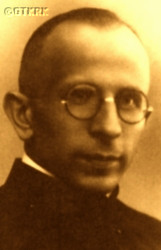
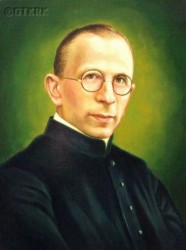
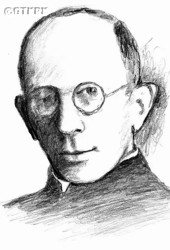
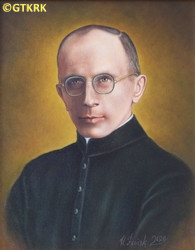
religious status
blessed
surname
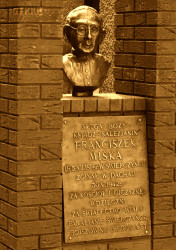
MIŚKA
forename(s)
Francis (pl. Franciszek)

function
religious cleric
creed
Latin (Roman Catholic) Church RCmore on
en.wikipedia.org
[access: 2014.09.21]
congregation
Society of St Francis de Sales SDBmore on
en.wikipedia.org
[access: 2013.05.19]
(i.e. Salesians of Don Bosco)
diocese / province
St Stanislav Kostka Warsaw Inspectorate SDB
Gniezno and Poznań archdiocese (aeque principaliter)more on
www.archpoznan.pl
[access: 2012.11.23]
RC Military Ordinariate of Polandmore on
en.wikipedia.org
[access: 2014.12.20]
date and place
of death
30.05.1942

KL Dachauconcentration camp
today: Dachau, Upper Bavaria reg., Bavaria state, Germany
more on
en.wikipedia.org
[access: 2016.05.30]
details of death
After the German and Russian invasion of Poland in 09.1939 and the outbreak of World War II, during the defensive war in 09.1939 ministered as a volunteer military chaplain.
After the beginning of the German occupation, returned after a few weeks to Ląd on the Warta River, where ministered. The local SDB Society house, located in the former monastery complex and abbey of the Cistercian Order Ocist, became part of the Germ. Regierungsbezirk Hohensalza (Eng. Inowrocław Regency), within the province of Germ. Reichsgau Wartheland (Eng. Reich Wartheland district), created by the Germans on the territory of occupied Greater Poland and incorporated directly into the German Reich.
On 13.12.1939, the District Office of the Germ. Geheime Staatspolizei (Eng. Secret State Police), i.e. Gestapo, in the capital of the Germ. Reichsgau Wartheland in Poznań, issued an executive instruction, reference number IIB No. 406/39 Tgb. No. 3045/39, in which it ordered: „On the basis of the decree of the Germ. Höherer SS‐ und Polizeiführer (Eng. Higher SS and Police Leader), [SS‐Gruppenführer Wilhelm Koppe], of 12.11.1939, Catholic clergy, in addition to Poles and Jews, will also be subject to expulsion. The action against this group of people should be carried out in such a way that internment and transport are separate […] Approximately 80% of Catholic clergy are expected to be expelled. The selection of persons should be made based on their political threat. The internees cannot be placed in ordinary transit camps due to the possibility of international protest. Catholic clergy should be interned in male monasteries and kept there until a collective transport”.
On 06.01.1940, the monastery in Ląd was transformed by the Germans into the Germ. „Internierungslager” (Eng. „internment camp”) IL Lond.
Appointed „superior” by the Gestapo, responsible for the „discipline and conduct of the internees”.
Twice transported to the capital of the Germ. Regierungsbezirk Hohensalza, Inowrocław, and — at the regional Gestapo headquarters at the then Adolf‐Hitler‐Strasse‐41, i.e. today's Solankowa Street 52 — beaten bloody.
Despite this, a clandestine theological seminary operated in the monastery, with his knowledge and support. Due to the function held, was also one of the closest associates and confidants of the suffragan of the Diocese of Włocławek, Bp Michael Kozal, who was imprisoned there as well.
On 06.10.1941 arrested, along with all the clergy held in IL Lond, as part of the operation to eliminate the Polish Catholic clergy in the Germ. Reichsgau Wartheland.
Taken to the DL Konstantinow transit camp.
From there, on 30.10.1941, transported to the Germ. Konzentrationslager (Eng. concentration camp) KL Dachau in German Bavaria.
Placed in the Germ. Priesterblock (Eng. priest block), i.e. a group of camp barracks intended for clergy, primarily Catholic.
Brought to the camp, whose commandant was then the genocidal SS‐Obersturmbannführer Alexander Piorkowski, during the worst period of its operation. „There was no worse place on earth” — this is how the future missionary and apostle to lepers, Fr Marian Żelazek, described KL Dachau many years after the war — „there was brutality, death, and hunger”. Prisoners slaved, i.a. in the so‐called „plantages”, fields adjacent to the camp — in winter had to endur rain, frost, and snow, and on hot days the mountain sun. There was an indescribable hunger that left one unable to think of anything other than how to get a piece of bread. A prisoner's weight often did not exceed 40 kg. And in 1942, the Germans reduced the starvation rations even further.
Tortured and forced to carry soup kettles, broke his arm, which was provisionally bandaged, and sent back to work three days later.
Perished of his wounds and exhaustion.
According to the death certificate, prepared in KL Dachau, the „honest” otherwise German „medical doctors” and formalists — and at the same time, unrivaled fairy tale spinners — noted that the cause of death was Germ. „Versagen von Herz und Kreislauf, bei Lungenentzündung” (Eng. „Heart and circulatory failure, due to pneumonia”).
prisoner camp's numbers
28037Click to display source page (KL DachauClick to display the description)
cause of death
extermination: exhaustion and starvation
perpetrators
Germans
sites and events
KL DachauClick to display the description, DL KonstantinowClick to display the description, 06.10.1941 arrests (Warthegau)Click to display the description, Reichsgau WarthelandClick to display the description, IL LondClick to display the description, «Intelligenzaktion»Click to display the description, Ribbentrop‐MolotovClick to display the description, Pius XI's encyclicalsClick to display the description
date and place
of birth
05.12.1898

Świerczyniectoday: Bojszowy gm., Bieruń‐Lędziny pov., Silesia voiv., Poland
more on
en.wikipedia.org
[access: 2022.01.28]
parents
MIŚKA John
🞲 ?, ? — 🕆 ?, ?

PILORZ Sophia
🞲 ?, ? — 🕆 ?, ?
baptism
08.12.1898

Bieruń Starytoday: urban district, Bieruń urban gm., Bieruń‐Lędziny pov., Silesia voiv., Poland
more on
en.wikipedia.org
[access: 2020.11.05]
St Bartholomew the Apostle RC church
religious vows
24.07.1917 (temporary)
presbyter (holy orders)
ordination
24.07.1927

Turintoday: Turin city prov., Piedmont reg., Italy
more on
en.wikipedia.org
[access: 2020.11.01]
positions held
1936 – 1940
friar — Lądalso: Ląd on Warta
today: Lądek gm., Słupca pov., Greater Poland voiv., Poland
more on
en.wikipedia.org
[access: 2020.12.11] ⋄ Society's House, Salesians of Don Bosco SDB — director of the Minor Theological Seminary (for so‐called „Sons on Mary”) and parish priest of Blessed Virgin Mary and St Nicholas parish
1931 – 1936
friar — Jaciążektoday: Maków Mazowiecki gm., Płoniawy‐Bramura pov., Masovia voiv., Poland
more on
en.wikipedia.org
[access: 2022.09.11] ⋄ Society's House, Salesians of Don Bosco SDB — director of Educational Institute
1929 – 1931
friar — Vilniustoday: Vilnius city dist., Vilnius Cou., Lithuania
more on
en.wikipedia.org
[access: 2022.01.06] ⋄ Society's House, Salesians of Don Bosco SDB — prefect at a public school
1927 – 1929
friar — PrzemyślZasanie district
today: Przemyśl city pov., Subcarpathia voiv., Poland
more on
en.wikipedia.org
[access: 2021.04.01] ⋄ Society's House, Salesians of Don Bosco SDB — school counselor and catechist at Orphanage
student — TurinCrocetta district
today: Turin city prov., Piedmont reg., Italy
more on
en.wikipedia.org
[access: 2020.11.01] ⋄ theology, „Don Bosco” International Institute, Salesians of Don Bosco SDB
friar — Oświęcimtoday: Oświęcim gm., Oświęcim pov., Lesser Poland voiv., Poland
more on
en.wikipedia.org
[access: 2021.06.07] ⋄ Society's House (Casa Madre), Salesians of Don Bosco SDB — assistance (educational and pastoral practice)
pupil — KrakówDębniki district
today: Kraków city pov., Lesser Poland voiv., Poland
more on
en.wikipedia.org
[access: 2021.12.18] ⋄ St Francis de Sales Gymnasium for Boys, i.e. Philosophical Studentate, Blessed Virgin Mary Immaculate Conception Congregation's house (known as „Łosiówka”, at 30 Tyniecka Str.), Salesians of Don Bosco SDB — completion of education at the gymnasium level; also: two—year philosophy course
student — KrakówDębniki district
today: Kraków city pov., Lesser Poland voiv., Poland
more on
en.wikipedia.org
[access: 2021.12.18] ⋄ St Francis de Sales Gymnasium for Boys, i.e. Philosophical Studentate, Blessed Virgin Mary Immaculate Conception Congregation's house (known as „Łosiówka”, at 30 Tyniecka Str.), Salesians of Don Bosco SDB
1916 – 1917
novitiate — Pleszówtoday: part of Nowa Huta XVIII district, Kraków city pov., Lesser Poland voiv., Poland
more on
en.wikipedia.org
[access: 2021.06.07] ⋄ Society's House, Salesians of Don Bosco SDB
till 1916
pupil — Oświęcimtoday: Oświęcim gm., Oświęcim pov., Lesser Poland voiv., Poland
more on
en.wikipedia.org
[access: 2021.06.07] ⋄ Gymnasium for Boys, Society's House (Casa Madre), Salesians of Don Bosco SDB
others related
in death
ANTONOWICZClick to display biography Ignatius Thaddeus, DOBIASZClick to display biography Ignatius, GOLDAClick to display biography Charles, HARAZIMClick to display biography Francis Louis, KOWALSKIClick to display biography Joseph, MROCZEKClick to display biography Louis John, SZEMBEKClick to display biography Francis Vladimir, ŚWIERCClick to display biography John, WOJCIECHOWSKIClick to display biography Casimir
sites and events
descriptions
KL Dachau: KL Dachau in German Bavaria, set up in 1933, became the main German Germ. Konzentrationslager (Eng. concentration camp) KL for Catholic priests and religious during World War II: On c. 09.11.1940, Reichsführer‐SS Heinrich Himmler, head of the SS, Gestapo and German police, as a result of the Vatican's intervention, decided to transfer all clergymen detained in various concentration camps to KL Dachau camp. The first major transports took place on 08.12.1940. In KL Dachau Germans held approx. 3,000 priests, including 1,800 Poles. The priests were forced to slave labor in the Germ. „Die Plantage” — the largest herb garden in Europe, managed by the genocidal SS, consisting of many greenhouses, laboratory buildings and arable land, where experiments with new natural medicines were conducted — for many hours, without breaks, without protective clothing, no food. They slaved in construction, e.g. of camp's crematorium. In the barracks ruled hunger, freezing cold in the winter and suffocating heat during the summer, especially acute in 1941‐1942. Prisoners suffered from bouts of illnesses, including tuberculosis. Many were victims of murderous „medical experiments” — in 11.1942 c. 20 were given phlegmon injections; in 07.1942 to 05.1944 c. 120 were used by for malaria experiments. More than 750 Polish clerics where murdered by the Germans, some brought to TA Hartheim euthanasia centre set up in Schloss Hartheim in Austria and murdered in gas chambers. At its peak KL Dachau concentration camps’ system had nearly 100 slave labour sub‐camps located throughout southern Germany and Austria. There were c. 32,000 documented deaths at the camp, and thousands perished without a trace. C. 10,000 of the 30,000 inmates were found sick at the time of liberation, on 29.04.1945, by the USA troops… (more on: www.kz-gedenkstaette-dachau.deClick to attempt to display webpage
[access: 2013.08.10], en.wikipedia.orgClick to attempt to display webpage
[access: 2016.05.30])
DL Konstantinow: Germ. Durchgangslager Konstantinow (Eng. Transit Camp) — resettlement concentration camp established on 05.01.1940 in Konstantynów Łódzki (c. 10 km west of the center of Łódź), and operational till 16.08.1943. Polish prisoners from Greater Poland (Wielkopolska), Pomerania and central Poland were held there. Approx. 42,000 were interned, thousands of them perished out of which approx. 700 were identified. In 10.1941‐12.1941 approx. 450 Polish priests and religious from Częstochowa, Łódź and Włocławek dioceses and Poznań archdiocese were imprisoned there prior to transport to KL Dachau concentration camp. (more on: pl.wikipedia.orgClick to attempt to display webpage
[access: 2013.08.10], ipn.gov.plClick to attempt to display webpage
[access: 2021.12.19])
06.10.1941 arrests (Warthegau): In the Germ. Reichsgau Wartheland (Eng. Warta Country Reich District), a new province created by the Germans in occupied Greater Poland, its Germ. Gauleiter (Eng. district leader), criminal Arthur Greiser, sought to make the province under his jurisdiction a Germ. „Mustergau” (Eng. model district). One of the pillars of his policy was the postulate Germ. „Ohne Gott, ohne Religion, ohne Priesters und Sakramenten” (Eng. „without God, without religion, without priest and sacrament”). In 1940, the preparation of the practical assumptions of this policy in the Germ. Gauleiter Greiser's Office was led by a German Evangelical theologian, Germ. Regierungsrat (Eng. Government Counselor) and head of the department for religious affairs, Germ. Kirchenreferent (Eng. Church Referent), Wilhelm Dudzus. On 10.07.1940, prob. at a party meeting in Munich, he revealed the „13 Points”, which were to become the basis of German policy in the Germ. Reichsgau Wartheland. The content of the „13 Points” de facto became public knowledge — for which, incidentally, he was dismissed from his position in early 1941. Point 1 read: „There are no churches in the national sense, but only religious groups in the sense of associations”, and Dudzus added that „Churches cease to be corporations under public law”. In point 2, he informed that „There are no relations with groups outside the Germ. Reichsgau, nor any ties of a legal, financial, or service nature with the Reich Church”. And explained: „The churches of the Germ. Reichsgau Wartheland are to be independent” and that „The union of the Catholic Church with the Vatican will be dissolved”. And in point 12, it informed that „All religious institutions and monastic associations are subject to dissolution because they are contrary to the German concept of decency and nationality policy”. These demands were then implemented step by step. Thus, on 06.02.1941, a ban was issued on all fundraising for religious and charitable purposes, including church collections. On 01.04.1941, the activities of Catholic diocesan curiae were banned. Finally, on 13.09.1941, Germ. Gauleiter Arthur Greiser issued the regulation Germ. „Verordnung des Reichsstatthalters im Wartheland über religiöse Vereinigungen und Religionsgesellschaften im Reichsgau Wartheland” (Eng. „Regulation of the Reich Governor in Wartheland regarding religious associations and religious unions in Reichsgau Wartheland”). §1.1 stated: „In the Germ. Reichsgau Wartheland […] [the three Churches and] the "Roman Catholic Church of German Nationality in the Wartheland" exist as legal entities under private law. They replace the legal entities of the Evangelical and Roman Catholic Churches that existed on September 1, 1939, in the Wartheland”. De facto, this meant the delegalization of the Roman Catholic Church, retroactively to 01.09.1939, the date of the German invasion of Poland. §1.3 stipulated that „The rights and obligations of religious legal entities existing in the Germ. Reichsgau Wartheland on 1 September 1939 shall be transferred to the legal entities under private law referred to in paragraph 1 […] Polish property is excluded from this transfer. Polish property is defined as the property of legal entities whose members on 1 September 1939 were exclusively or predominantly Polish or which were under predominant Polish influence at that time”. This meant the plunder of property from the Roman Catholic Church. At the same time, §6.1 sanctioned a racial policy towards religious denominations: „[…] a German may be a member of a religious association or society exclusively of German nationality. Poles may not be members of a religious association or society of German nationality”. Immediately thereafter, on 06‐07.10.1941, mass arrests of Polish priests took place — c. 352 religious were arrested. All were placed in the DL Konstantinow transit camp in Konstantynów and IL Lond in Ląd on the Warta River, or in the KL Posen concentration camp — in this case, the detainees were first registered, photographed, and interrogated at the notorious Poznań headquarters of the Germ. Geheime Staatspolizei (Eng. Secret State Police), i.e. the Gestapo, in the former Pl. „Dom Żołnierza” (Eng. „Soldier's House”). Most of them were deported to the KL Dachau concentration camp on 30.10.1941.
Reichsgau Wartheland: After the Polish defeat in the 09.1939 campaign, which was the result of the Ribbentrop‐Molotov Pact and constituted the first stage of World War II, and the beginning of German occupation in part of Poland (in the other, eastern part of Poland, the Russian occupation began), the Germans divided the occupied Polish territory into five main regions (and a few smaller). The largest one was transformed into Germ. Generalgouvernement (Eng. General Governorate), intended exclusively for Poles and Jews and constituting part of the so‐called Germ. Großdeutschland (Eng. Greater Germany). Two were added to existing German provinces. From two other separate new provinces were created. Greater Poland region was one of them, incorporated into Germany on 08.10.1939, by decree of the German leader Adolf Hitler (formally came into force on 26.10.1939), and on 24.01.1940 transformed into the Germ. Reichsgau Wartheland (Eng. Warta Country Reich District), in which the law of the German state was to apply. The main axis of the policy of the new province, the territory of which the Germans recognized as the Germ. „Ursprünglich Deutsche” (Eng. „natively German”), despite the fact that 90% of its inhabitants were Poles, was Germ. „Entpolonisierung” (Eng. „Depolonisation”), i.e. forced Germanization. C. 100,000 Poles were murdered as part of the Germ. „Intelligenzaktion”, i.e. extermination of Polish intelligentsia and ruling classes. C. 630,000 were forcibly resettled to the Germ. Generalgouvernement, and their place taken by the Germans brought from other areas occupied by Germany (e.g. the Baltic countries, Bessarabia, Bukovina, etc.). Poles were forced to sign the German nationality list, the Germ. Deutsche Volksliste DVL. As part of the policy of „Ohne Gott, ohne Religion, ohne Priesters und Sakramenten” (Eng. „No God, no religion, no priest or sacrament”) most Catholic priests were arrested and sent to concentration camps. All schools teaching in Polish, Polish libraries, theaters and museums were closed. Polish landed estates confiscated. To further reduce the number of the Polish population, Poles were sent to forced labor deep inside Germany, and the legal age of marriage for Poles was increased (25 for women, 28 for men). The German state office, Germ. Rasse‐ und Siedlungshauptamt (Eng. Main Office of Race and Settlement) RuSHA, under the majesty of German law, abducted several thousand children who met specific racial criteria from Polish families and subjected them to forced Germanization, handing them over to German families. After the end of hostilities of World War II, the overseer of this province, the Germ. Reichsstatthalter (Eng. Reich Governor) and the Germ. Gauleiter (Eng. district head) of the German National Socialist Party, Arthur Karl Greiser, was executed. (more on: en.wikipedia.orgClick to attempt to display webpage
[access: 2024.06.21])
IL Lond: The Gestapo District Office in Poznań issued on 13.12.1939 executive instruction Ref. IIB No. 406/39 Tgb. No. 3045/39, ordering: „Based on the regulation of the Germ. Höherer SS‐ und Polizeiführer (Eng. Higher Commander of the SS and Police) [of the German province of Warthegau (Eng. Greater Poland)] of 12.11.1939 [SS‐Gruppenführer Wilhelm Koppe], apart from Poles and Jews, also Catholic clergy will be expelled. Action against this group of people should be carried out in such a way that internment and transport are separate […] C. 80% of Catholic clergy are expected to be expelled. The selection based on political threat posed. Internees cannot be placed in regular transit camps due to the possibility of international protest. Catholic clergy should be interned in men's monasteries and held there till mass transportation out”. And so in 1940‐1941, in a formerly Cistercian priory and monastery (today Salesian Institute) in Ląd on Warta river Germans set‐up a transit Germ. „Internierungslager” (Eng. „Internment camp”) for Polish priests and religious, from Włocławek, Gniezno, Warszawa, Poznań, Płock and Częstochowa dioceses and religious and monks from a number of congregations. Approx. 152 religious (70 till 03.04.1941 and 82 in 06‐28.10.1941) were held there prior to being sent to KL Dachau concentration camp. After the deportation, the Germans organized a training center for the German National Socialist youth wing, Germ. „Hitler‐Jugend” (Eng. „Hitler youth”), in the abbey. (more on: pl.wikipedia.orgClick to attempt to display webpage
[access: 2013.08.10], yadda.icm.edu.plClick to attempt to display webpage
[access: 2016.03.14])
«Intelligenzaktion»: German: «Intelligenzaktion» (English: „Intelligence Action”) — a German program of extermination of the Polish elite, mainly the intelligentsia and leadership layers, carried out from the beginning of the occupation in w 09.1939 to 04.1940, mainly in territories directly annexed to Germany, but also in the so‐called Germ. Generalgouvernement (Eng. General Governorate), where it was called «AB‐aktion». In the first phase, immediately after the beginning of the German occupation, during military operations carried out by the Germ. Wehrmacht (Eng. Armed Forces) and the genocidal units of the Germ. Einsatzgruppen (Eng. Operational Groups) of the Germ. Sicherheitspolizei (Eng. Security Police), i.e. SiPo, and Germ. Sicherheitsdienst des Reichsführers SS (Eng. Security Service of the Reichsführer SS), i.e. SD, organized by the Germ. Reichssicherheitshauptamt (Eng. Reich Main Security Office), i.e. RSHA, which followed the troops, carried out under the Germ. Unternehmen „Tannenberg” (Eng. Operation „Tannenberg”) — based on the so‐called Germ. Sonderfahndungsliste (Eng. Special Wanted Lists), i.e. proscription lists of Poles considered particularly dangerous to the Third Reich, prepared by the Zentralstelle II/P (Polen) unit of the German RSHA. Later, implemented by the German civilian occupation authorities and the genocidal unit of the Germ. Volksdeutscher Selbstschutz (Eng. Ethnic Germans Self‐Defense), whose members were Germ. Volksdeutsche (Eng. Ethnic Germans), i.e. representatives of the German minority in Poland. According to various sources, these lists, at the beginning of 09.1939, could have contained the details of 61,000—88,000 „dangerous” Poles — although these figures cannot be confirmed. In total, during this genocide, c. 50,000 teachers, Catholic priests, representatives of the landed gentry, freelancers, social and political activists, and retired military personnel were systematically and methodically murdered. Another 50,000 were sent to concentration camps, where only a negligible percentage survived. (more on: en.wikipedia.orgClick to attempt to display webpage
[access: 2014.10.04])
Ribbentrop‐Molotov: Genocidal Russian‐German alliance pact between Russian leader Joseph Stalin and German leader Adolf Hitler signed on 23.08.1939 in Moscow by respective foreign ministers, Mr. Vyacheslav Molotov for Russia and Joachim von Ribbentrop for Germany. The pact sanctioned and was the direct cause of joint Russian and German invasion of Poland and the outbreak of the World War II in 09.1939. In a political sense, the pact was an attempt to restore the status quo ante before 1914, with one exception, namely the „commercial” exchange of the so‐called „Kingdom of Poland”, which in 1914 was part of the Russian Empire, fore Eastern Galicia (today's western Ukraine), in 1914 belonging to the Austro‐Hungarian Empire. Galicia, including Lviv, was to be taken over by the Russians, the „Kingdom of Poland” — under the name of the General Governorate — Germany. The resultant „war was one of the greatest calamities and dramas of humanity in history, for two atheistic and anti‐Christian ideologies — national and international socialism — rejected God and His fifth Decalogue commandment: Thou shall not kill!” (Abp Stanislav Gądecki, 01.09.2019). The decisions taken — backed up by the betrayal of the formal allies of Poland, France and Germany, which on 12.09.1939, at a joint conference in Abbeville, decided not to provide aid to attacked Poland and not to take military action against Germany (a clear breach of treaty obligations with Poland) — were on 28.09.1939 slightly altered and made more precise when a treaty on „German‐Russian boundaries and friendship” was agreed by the same murderous signatories. One of its findings was establishment of spheres of influence in Central and Eastern Europe and in consequence IV partition of Poland. In one of its secret annexes agreed, that: „the Signatories will not tolerate on its respective territories any Polish propaganda that affects the territory of the other Side. On their respective territories they will suppress all such propaganda and inform each other of the measures taken to accomplish it”. The agreements resulted in a series of meeting between two genocidal organization representing both sides — German Gestapo and Russian NKVD when coordination of efforts to exterminate Polish intelligentsia and Polish leading classes (in Germany called «Intelligenzaktion», in Russia took the form of Katyń massacres) where discussed. Resulted in deaths of hundreds of thousands of Polish intelligentsia, including thousands of priests presented here, and tens of millions of ordinary people,. The results of this Russian‐German pact lasted till 1989 and are still in evidence even today. (more on: en.wikipedia.orgClick to attempt to display webpage
[access: 2015.09.30])
Pius XI's encyclicals: Facing the creation of two totalitarian systems in Europe, which seemed to compete with each other, though there were more similarities than contradictions between them, Pope Pius XI issued in 03.1937 (within 5 days) two encyclicals. In the „Mit brennender Sorge” (Eng. „With Burning Concern”) published on 14.03.1938, condemned the national socialism prevailing in Germany. The Pope wrote: „Whoever, following the old Germanic‐pre‐Christian beliefs, puts various impersonal fate in the place of a personal God, denies the wisdom of God and Providence […], whoever exalts earthly values: race or nation, or state, or state system, representatives of state power or other fundamental values of human society, […] and makes them the highest standard of all values, including religious ones, and idolizes them, this one […] is far from true faith in God and from a worldview corresponding to such faith”. On 19.03.1937, published „Divini Redemptoris” (Eng. „Divine Redeemer”), in which criticized Russian communism, dialectical materialism and the class struggle theory. The Pope wrote: „Communism deprives man of freedom, and therefore the spiritual basis of all life norms. It deprives the human person of all his dignity and any moral support with which he could resist the onslaught of blind passions […] This is the new gospel that Bolshevik and godless communism preaches as a message of salvation and redemption of humanity”… Pius XI demanded that the established human law be subjected to the natural law of God , recommended the implementation of the ideal of a Christian state and society, and called on Catholics to resist. Two years later, National Socialist Germany and Communist Russia came together and started World War II. (more on: www.vatican.vaClick to attempt to display webpage
[access: 2023.05.28], www.vatican.vaClick to attempt to display webpage
[access: 2023.05.28])
sources
personal:
bws.sdb.org.plClick to attempt to display webpage
[access: 2019.05.30], pl.wikipedia.orgClick to attempt to display webpage
[access: 2012.11.23], www.mbuch.plClick to attempt to display webpage
[access: 2016.04.23], www.ipgs.usClick to attempt to display webpage
[access: 2012.11.23], salezjanie.plClick to attempt to display webpage
[access: 2013.08.10]
bibliographical:
„International Tracing Service (ITS), Bad Arolsen, GermanyClick to display source page”, Arolsen Archives
original images:
www.mbuch.plClick to attempt to display webpage
[access: 2016.04.23], wsdts.plClick to attempt to display webpage
[access: 2016.04.23], www.salon24.plClick to attempt to display webpage
[access: 2018.02.15], www.mbuch.plClick to attempt to display webpage
[access: 2016.04.23], www.ssb24.plClick to attempt to display webpage
[access: 2018.02.15], salezjanieoswiecim.plClick to attempt to display webpage
[access: 2025.02.11], braciawasowicz.blogspot.comClick to attempt to display webpage
[access: 2013.12.04], pl.wikipedia.orgClick to attempt to display webpage
[access: 2013.12.04]

LETTER to CUSTODIAN/ADMINISTRATOR
If you have an Email client on your communicator/computer — such as Mozilla Thunderbird, Windows Mail or Microsoft Outlook, described at WikipediaPatrz:
en.wikipedia.org, among others — try the link below, please:
LETTER to CUSTODIAN/ADMINISTRATORClick and try to call your own Email client
If however you do not run such a client or the above link is not active please send an email to the Custodian/Administrator using your account — in your customary email/correspondence engine — at the following address:

giving the following as the subject:
MARTYROLOGY: MIŚKA Francis
To return to the biography press below:
 Click to return to biography